
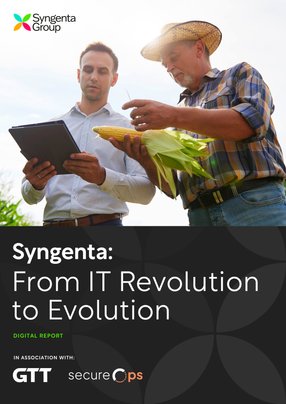
In agricultural technology (AgTech), a solid network is more than a foundational utility; it’s at the forefront of innovation, streamlining operations and scaling. Syngenta, a science-based AgTech business, focuses on supporting farmers in growing food sustainably. However, to achieve the mandate, a sprawling global network is essential. Kris Manning, the Global Head of IT Networks, has led developing and managing its global network systems since joining Sygenta in late 2021.
Kris brings a practicality, shaped by years in the trenches, from programming to networking and then leading technical teams. He points out that while technology evolves, his goal is a network built on “stability, security, performance and enablement.”
AI’s role: From alert overload to smarter operations
AI is moving from a talking point to a real-world network operation and security tool. Syngenta embraces AI, but Kris says his team approached it thoughtfully, looking for the right fit. He recalls the old way of fixing problems: “When an issue presented itself an engineer first needed to use an often wide variety of tools, graphs, and logs to build a mental map of the symptoms and datapoints.”
For Kris, AI’s most significant benefit is its ability to act as an intelligent assistant. “One of the biggest opportunities I see for AI in this field is its ability to handle tasks on our behalf,” he explains. “It can analyse vast amounts of data from multiple sources, identify patterns and make informed decisions about potential issues, processing millions more metrics than any human could manage alone.”
A clear win was revealed in 2022 when Syngenta started using LogicMonitor for network management. Adding its AI component (first Dexter, now EdwinAI) brought striking changes. Kris recalls: “It promised to do all of the correlation and the deduplication of alerts and we turned it on and our alerts went to almost zero. We reduced alerts by 95% to the point where we thought we’d broken the monitoring. But we actually saw between 90% and 95% reduction of tickets based on the AI that was built into the tool, which subsequently only gave us the tickets we needed for action.”
The experience cemented Kris’s confidence in AI for AIOps, spotting anomalies, predictive upkeep and security: areas where sifting through massive datasets is key. He believes AI is helping to make the field exciting again: “I think that we’re going to start seeing networks starting to be cool again, which is really good to see.”
Beyond just connecting: Getting business value from modern wireless
Syngenta is not just thinking about providing wireless connections anymore. Kris explains that much of what we do is expected, or ‘table stakes’ as his CIO often mentions.
A “wireless first” mindset is taking hold, cutting back on costly traditional cables and switches, which Kris points out are “often the most expensive part of an IT deployment.” Going wireless improves mobility and simplifies office layouts. But what truly excites Kris is “leveraging the data generated by existing wireless infrastructure” to manage facilities more intelligently and even assist with health and safety requirements. For him, real progress goes beyond basic connectivity. “We are now exploring how to extract business intelligence from wireless infrastructure for facilities management purposes, moving beyond simply enabling connections to delivering actionable insights that drive operational efficiency and reduce costs.”
The wireless evolution shows a wider industry trend: wireless networks are not just technical bits and pieces but strategic assets that can offer real business benefits.
SASE vs. traditional: Juggling security, simplicity and risk
Traditional network security involved building a “perimeter,” with company data centres acting like guarded forts protected by firewalls. The model worked when most people worked on-site and applications and data lived in a local data centre.
However, the IT landscape has transformed. Users now work from diverse locations, applications have moved to cloud environments and data is spread across multiple services, exposing weaknesses in traditional security.
Kris says one reason for the change is the need for “internet cafe-style connectivity,” where users can connect to the internet and get everything they need, no matter where they are, with robust security and a consistent experience. The approach makes things convenient for users and simpler to manage while keeping things secure with Zero Trust ideas, traffic monitoring and content filtering. Kris highlights: “For me, one of the greatest things it provides is security, ease of doing business and reduced network complexity.”
Kris is sceptical about the risks of putting all services with one SSE provider. He worries about major outages, becoming too dependent on one vendor. “Do I want all my eggs in one basket when these things happen, as inevitably they will?” he asks. Data location rules and the difficulty of audits add to his mindset.
While SSE is clearly where things are heading, Kris is cautious about a quick, total switch: “Whether we would completely give ourselves over to SSE, it’s something we talk about a lot.” The careful approach highlights that security is now a vital part of the business and key to success in today’s sprawling digital world.
Resources: Making networks cool again
Finding and retaining a talented workforce is challenging across the industry. Kris refers to Alexis Bertholf’s famous question about the difficulty in making network engineering “cool again.” He sees a generational change: “I came into the IT industry at 16 when networking was very cool. Then, the industry went through a long period when it was accepted and became the norm. I see the industry coming back, becoming cool again.”
One specific challenge is a shrinking number of “legacy systems specialists.” These people know their way around the command line and can work directly with network hardware.” Managing older hardware remains crucial, even with software-defined networking and user-friendly interfaces. “We’re starting to see that it’s becoming challenging to hire people who have that level of knowledge of legacy systems that will be around for many years to come,” Kris warns, comparing it to the ongoing need for COBOL programmers.
Recruiting has become more challenging due to competition from DevOps, cybersecurity and AI fields. He adds, “We are not seeing people take up networking as a career as much.” Syngenta has a multi-faceted plan to address the challenge. Kris stresses, “One key approach is hiring for attitude, seeking curious and eager individuals to learn and then invest in their training.” The plan incorporates its mission to support farmers and feed the world as a motivator to attract talent. Showcasing the rapid adoption of digital tools and AI in agriculture as an exciting and meaningful tech opportunity. Kris adds: “Internally, it looks to develop talent from within its existing IT departments.” Another avenue is tapping into its strong partnerships with tech and service partners to discover and nurture new talent.
Partners are more than just numbers
Syngenta depends on many key partners to manage significant parts of its network infrastructure. Therefore, picking partners involves a deep dive that goes beyond typical purchasing decisions. Kris stresses the need for partners to align with Syngenta’s mission and values; top-notch service, SLAs and KPIs are just the starting point. He adds: “It really is about who they are and how they respond when the chips are down.” Apart from BT Group, Syngenta’s two other significant partners are SecureOps and GTT.
Partnership in action: SecureOps and the network comeback
SecureOps is crucial in managing Syngenta’s global backbone – the vital network linking hundreds of sites globally. The partnership was essential when Kris joined Syngenta in late 2021 during what was called the “network crisis.”
“The network was not reliable, we were having daily outages and there was an overall lack of stability and predictability,” Kris recalls. “We relied on SecureOps and the team stepped up and delivered.”
He credits his team, SecureOps and BT for stabilising the network, providing operational backup and providing vital high-level tech skills and architectural advice. “They’ve got an excellent team that includes high-level senior network engineers and architects who gave us a level of expertise that we just didn’t have at the time.”
SecureOps remains a key partner in Syngenta’s network development, especially with the upcoming SD-WAN rollout. It offers strategic counsel and manages the core infrastructure, backing up the changes. Kris likes their collaborative style, where SecureOps questions ideas and makes recommendations to ensure the best for Syngenta, not just unquestioningly following orders. Its approach fits Syngenta’s cybersecurity, where SecureOps works with internal teams to set up governance and proactively find security improvements.
Partnership in action: GTT and global reach
GTT Communications is another vital partner, supplying many of Syngenta’s global Wide Area Network (WAN) circuits. As one of the biggest providers in this area, GTT’s dependability and quick response are crucial. “We have multiple sites, many of which are difficult to reach locations, so getting infrastructure on site, regardless of location, is important,” Kris notes.
GTT’s wide range of services and its ability to reach these remote spots are essential. The partnership means regular chats, updates on tech changes and proactive intervention. Kris points to GTT’s part in future plans, particularly for cloud integration and evolving the backbone. “GTT is definitely one of those service providers that plays particularly well with us in that space,” he says, highlighting ongoing talks about fitting GTT’s new offerings with Syngenta’s SSE and SD-WAN plans. However, they’re carefully monitoring how mature the technology is. Like all partners, GTT actively helps Syngenta’s cybersecurity by offering recommendations and advice on reducing risks.
What’s next: Automation, simplicity and powering the business
Looking forward three to five years, Kris sees Syngenta’s network strategy continuing to evolve. It will focus on automation, simplification and consistently helping the business succeed. AI and SSE/SASE will remain central.
A big project is the SD-WAN rollout, which will be a major focus. Alongside the rollout, Kris pushes for “aggressive automation,” aiming to “automate repeatable tasks wherever possible.” His goal isn’t just efficiency – he wants to make things run smoother for users, “whether that’s an extra click or a clunky process, these are bumps in the road that we want to remove.” He often challenges his team: “What can we automate?”
Syngenta will continue its internet-first and wireless-first strategies, aiming for a smooth, secure user experience in any location while managing costs and adding business value. Kris mentions: “Cloud adoption remains a priority, with plans to shift more network functions to the cloud, such as using cloud fabric for the network backbone, to reduce complexity and simplify management.”
At the heart of this forward movement is Kris’s dedication to thoughtfully tackling traditional network parts while making sure the right people are there to manage them. He’s a big believer in simplification, trying to “reduce complexity and demystify network operations.” At the same time, Kris focuses on staying ahead of Syngenta’s changing business needs by predicting the demands of its fast -moving AgTech world.
Syngenta’s innovative approach to digital change shows practical but forward-thinking IT leadership, marking the future in the AgTech sector. It’s a careful shift from traditional models to a responsive, connected system. More than just a tech update – it’s a fundamental rethinking of how a global agribusiness can use digital tools to achieve its primary goal: helping farmers bring food to the table and promoting sustainable farming.
Syngenta’s digital evolution proves IT is no longer just support—it’s a force for innovation. By balancing cutting-edge tech with stability and strong partnerships, the company is transforming agriculture, driving sustainable growth from lab to field, in the UK and beyond.
Company portals
Executives

Kris Manning
Global Head of IT Networks at Syngenta
- Google Warns of Quantum Cyber Threat to Crypto by 2029Technology & AI
- Bank of England Warns of Escalating AI, Cyber & Market RiskTechnology & AI
- IBM & Red Hat: How Lightwell Can Lock Up AI-Era Open SourceTechnology & AI
- Cisco Research Stresses AI's Enterprise Networking ChallengeNetwork Security