Why Cisco's CEO Thinks AI will 'Make Cyber Attacks Better'
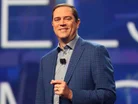
Chuck Robbins, CEO of Cisco, was one of many business leaders to attend the World Economic Forum's Annual Meeting 2026 in Davos.
Cisco defines itself as a world technology leader, providing software and building infrastructure that powers the internet. Unsurprisingly, it has embraced AI and introduced services which use it as a tool and mitigate potential risks.
For businesses failing to put AI at the forefront of their cybersecurity strategies, the risk of falling victim to sophisticated attacks is significant, especially for technology companies.
The escalating threat landscape
Speaking in Davos, Chuck said AI technology will be "bigger than the internet" – but that it could also be the downfall of some companies.
The world's most valuable company in 2000, Cisco experienced an 80% drop in value as tech stocks plummeted at the turn of the millennium – known infamously as the dot-com bubble burst.
Since overcoming this drop and rebuilding, the company has partnered with NVIDIA to deploy AI and scaling infrastructure.
Cisco places AI at the heart of its business – using the technology itself to protect its applications from AI-scale attacks and identifying security risks.
Some of its safeguarding technologies targeted towards the workplace include Cisco AI Defense and Cisco Hypershield.
Cisco's CEO comments that AI will "make our cyber attacks better" and "make the scams that people see in their inboxes seem more real", referring to the threat that all internet users face.
AI-powered attacks targeting enterprises
However, with cyber criminals taking advantage of AI's development and targeting large-scale businesses, the severity of its impact could be the ruin of many businesses that fall behind the curve.
While the most successful businesses are using AI to mitigate potential risks, those less in tune with technological advancements are more likely to be hit by cyber attacks.
In recent days, Nike is reported to have suffered a massive data breach involving 1.4TB of data – some of which the ransomware group responsible claims it published. Nike's competitor and Sportswear giant Under Armour is also investigating claims of a major data breach.
The first ever primarily AI-driven cyber attack was almost successful. Chinese state-sponsored hackers exploited Anthropic's Claude AI agent but Anthropic managed to intercept and stop the attack, according to industry reports.
These exampless illustrates that AI technology has become both risk and remedy of cyber attacks – and, if used correctly, the way Cisco and Anthropic have trained their AI could potentially be upskilled to avoid the possibility of security breaches.
Strategic investment priorities
A hot topic of conversation among tech leaders is the AI bubble and the risk of it bursting.

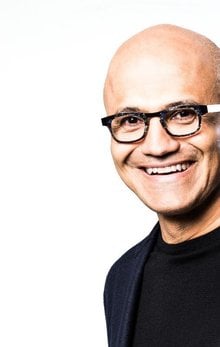
Speaking to Larry Fink, CEO of BlackRock and Interim Co-Chair of the WEF, Microsoft CEO Satya Nadella told the audience in Davos: "For this not to be a bubble, by definition it requires that the benefits of this are more easily spread.
"To me, a long-term, scalable solution is to have all of these token factories part of the real economy connected to the grid, connected to the telco network – and that's what will drive that scale, whether it's in the global south or in the developed world."
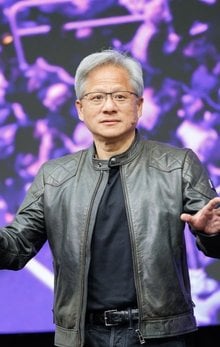
NVIDIA CEO Jensen Huang says the AI boom will create "six-figure salaries" for those who are building data centres and factories adopting it.
"It's wonderful that the jobs are related to trade craft and we're going to have plumbers and electricians and construction and steel workers and network technicians," Jensen said in Davos.
Blue-collar roles were shown as less likely to be automated in a Microsoft 2025 report, with such roles becoming increasingly attractive to Gen Z.

AI is famously controversial among consumers, with some tech companies, such an Nintendo, opting to go against the grain. The brand opposes AI-generated content and is known for its passion for human-made work.
At a smaller scale, startups in specialised industries may still rely on traditional software to avoid high costs and the complexity of AI adoption.
For the modern executive, the choice of whether to adopt or abandon AI may depend on whether it impacts their value and security posture.
Firms that resist AI integration must ensure their traditional security infrastructure remains robust against evolving threats.
Company portals






Executives
Chuck Robbins
Chair and CEO
Jensen Huang
Founder and CEO
Larry Fink
Chairman and Chief Executive Officer
Satya Nadella
Chairman and CEO