
What the Latest Cyber Attacks Mean for Luxury Supply Chains
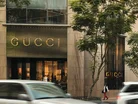
The consumer databases of Gucci, Balenciaga, and Alexander McQueen have been compromised in a ransomware attack, revealing vulnerabilities in the security frameworks of luxury retail supply chains.
This incident underscores how exposed these high-end brands remain in the face of evolving cyber threats.
Following the breach at parent company Kering, personal details, purchase histories and contact information from these prestigious brands have fallen into the wrong hands.
Kering confirmed the breach involved access to "limited customer data from some of our Houses" and stresses "no financial information – such as bank account numbers, credit card information or government-issued identification numbers – was involved."
This intrusion aligns with a broader narrative of increasing cyber threats across supply chains, as similar incidents, like the attack on JLR, demonstrate.

What's at risk?
The attack was executed by a hacker known as Shiny Hunters, who extracted names, addresses, emails, phone numbers and a field labelled "Total Sales" – capturing expenditures of individual customers on each brand.
Such data, when linked to high-value consumers, presents opportunities for identity theft, scams, or more sophisticated phishing attacks.
Although Kering hasn't disclosed the total number of affected individuals, it is suggested that data from approximately 7.4 million unique email addresses was stolen.
Kering confirmed its direct outreach to affected customers, adhering to data protection laws which allow for private notifications without public disclosure.
The cyber intrusion was traced back to unauthorised access in April, with the criminals making ransom demands in Bitcoin by June.
Kering opted not to engage with the attackers, focusing instead on following law enforcement guidance.
This incident parallels breaches affecting other luxury brands like Cartier and Louis Vuitton.
Cybersecurity experts, including those from Google, have connected Shiny Hunters to the UNC6040 group, notorious for exploiting third-party platforms such as Salesforce through social engineering to extract login credentials.
Retail supply chain exposed
This security lapse at Kering highlights more than just a data breach; it points to systemic vulnerabilities within luxury retail supply chains.
The interconnected systems that manage ecommerce, customer relationships, inventory and logistics form a complex web that attackers can infiltrate to cause far-reaching disruptions.
The reliance on various external partners, ranging from suppliers to shipping entities, means that any weak link in shared digital platforms poses a substantial risk to the entire chain.
Previous breaches in outsourced systems like Salesforce have served as entry points into core infrastructures, potentially leading to operational standstills, shipment delays and inventory shortages.
Michael Tigges, Senior Security Operations Analyst at Huntress, explains: "The breach at Kering highlights how luxury retailers remain attractive targets for data theft, even when payment data isn’t exposed."
He emphasises that with access to identity data alone, hackers can impersonate real users, potentially utilising tools like deepfake voice impersonations and AI-generated phishing strategies.
AI intensifies the cybersecurity threat
This incident also reveals the growing role of AI in enhancing cyberattack strategies.
Spencer Young, SVP EMEA at Delinea, says the "breach [is] impacting millions of customers... [and] is a stark reminder that ransomware and data theft has evolved into a shape-shifting, AI-enabled threat."
He suggests that defences such as zero trust architectures, Privileged Access Management and continuous credential monitoring are essential to safeguard supply chain systems.
James Blake, Vice President of Cyber Resiliency Strategy at Cohesity, adds: "Hackers are weaponising AI, exploiting systemic vulnerabilities, evading common security tools and targeting critical infrastructure with growing precision."
Using large language models (LLMs), criminals can craft highly effective, localised phishing attacks, which considerably increases their success rates.
While no direct payment data was breached, the risk of operational disruption remains significant, with reputational damage and regulatory scrutiny threatening to harm luxury retailers unless they implement robust cybersecurity measures.
Even in the absence of financial details, exposed personal data and purchase histories can cause customers to lose trust.
Retailers must treat cybersecurity as a fundamental aspect of supply chain continuity, requiring enhanced monitoring, identity protection and AI-driven strategies to counter these threats proactively.
As Kering assures that its systems are now secure, luxury brands like Gucci, Balenciaga and Alexander McQueen are compelled to secure their digital and physical supply chains comprehensively to maintain their exclusivity and customer trust.
Company portals

- How JLR's Category 3 Cyber Attack Caused Production ShutdownCyber Security
- Are Cybercriminals Targeting Transport and Supply Chains?Technology & AI
- Gartner: Is AI a Help or Hindrance to Supply Chain Security?Cyber Security
- JLR: How Cyber Attack Exposes Fragility of UK ManufacturingData Breaches