
Fighting Financial Fraud with SEON's Nauman Abuzar
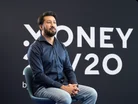
Nauman Abuzar is VP of Risk and Compliance at SEON.
Speaking with us at Money20/20 Europe, Nauman described how the company is repositioning fraud prevention as an intelligence-led discipline rather than a rules-based exercise.
Intelligence-led risk architecture
SEON has launched an MCP-enabled AI capability designed to transform how compliance teams interact with risk data.
Nauman explains: "We have been working closely with our customers to understand their challenges and we see that, for compliance teams and analysts, the challenge is not just managing alerts but having a more contextual view of those customers and transactions."
The platform now allows security teams to configure and integrate with AI tools such as Claude and Gemini.
He continues: "This will give them a much stronger context, generate a more thorough narrative and provide a pretty holistic view of the customer and analysis."
According to Nauman, this shift moves the industry away from fragmented tooling towards unified intelligence environments.
The platform enables AI-driven charting, network detection and rule creation. A move towards what Nauman describes as "more of an intelligence hub rather than just a solution".
Open integration for security operations
SEON has prioritised compatibility with major AI ecosystems rather than building closed systems. The company is focusing on interoperability as a core security architecture principle.
"These are pretty much open-source tools, accessible to most companies and AI is now embedded in most financial institutions," Nauman explains.
Many organisations have adopted AI capabilities but lack clear implementation frameworks.
"Our customers are heavily involved in AI, but they have no visibility on how to implement it, how to use it or how to bring it into their day-to-day operations," Nauman notes.

"Our launch helps them to enable that right away and it gives more efficiency and support them in their process."
The platform integrates directly with tools such as ChatGPT, Claude and Copilot.
"It's quite time-consuming for them to run some sort of analysis – copying and pasting from their existing tools into ChatGPT or Claude," he adds.
"But with this MCP integration, it will help them to contextually review and conclude anything much faster."
Governance frameworks for AI security
Adopting AI in regulated environments presents specific challenges around data security and regulatory compliance.
SEON has addressed these concerns with a governance-first approach to implementation.
"AI can be incredibly helpful in fighting financial crime, but it also supports criminals in generating more sophisticated fraud patterns," Nauman notes.
"We are making sure to set up the right governance and explainability around that – how it can be used and how it should be used."
He expresses how regulatory scrutiny is shaping product design decisions. "We made sure about how we're going to utilise our AI features, ensuring compliance not only from a data protection perspective, but also from an AML regulation perspective – because regulators like FinCEN, the ECB and other global regulators are very much focused on how AI needs to be utilised within the financial crime space and how we can secure data."
The balance between innovation and regulatory requirements remains a core consideration for cybersecurity architecture.
Hybrid models for threat response
SEON advocates for a hybrid model combining automation with human oversight. This approach maintains the analyst as the final decision maker in fraud detection workflows.
"Rule-based monitoring is of course going to stay there, it's not going to go away," Nauman confirms.
"It's going to be a hybrid approach for most fraud teams, or even AML teams. AI can summarise what has happened, but you are the one who is going to make the decision – whether it's fraud or whether it's a true positive or a false positive."
According to Nauman, AI cannot make decisions independently in fraud detection scenarios: "A human in the loop is really important. That's why a hybrid approach is something we have taken."
Network visualisation and pattern detection
SEON is investing well in network intelligence and visual analytics to combat complex fraud schemes. These capabilities allow security teams to identify connected threat actors and coordinated attack patterns.
"Using AI to generate a narrative to detect fraud patterns – using our network intelligence as well as our chart features – will give our customers a full, holistic view of the patterns and connected accounts," Nauman says.
Analysts can see the complete picture of fraud rings, analyse patterns and determine response actions.
The company's AI chart builder extends this visibility beyond frontline analysts to leadership teams. Security stakeholders can generate custom data views to support strategic decision making.
"They can generate any sort of data view they want… it's going to support not only analysts, but also leadership and business stakeholders."
SEON is building value through shared knowledge and industry-specific playbooks rather than proprietary intelligence hoarding.
Nauman concludes: "It's not like we're trying to hoard that knowledge – it's part of the community to support. From day one, the goal has been the same: fighting fraud, fighting financial crime."
Company portals

Executives
Nauman Abuzar
VP, Risk & Compliance

- Google Warns of Quantum Cyber Threat to Crypto by 2029Technology & AI
- Bank of England Warns of Escalating AI, Cyber & Market RiskTechnology & AI
- IBM & Red Hat: How Lightwell Can Lock Up AI-Era Open SourceTechnology & AI
- Cisco Research Stresses AI's Enterprise Networking ChallengeNetwork Security