Hitachi, OpenAI & Google Cloud Advance Physical AI Security

Hitachi is expanding partnerships with OpenAI and Google Cloud to address security challenges in physical AI deployments. Physical AI connects analysis and decision making to autonomous control of devices and equipment in real-world environments.
The company is deploying its Forward Deployed Engineers (FDE) model to support physical AI integrations alongside cybersecurity measures. FDEs are software specialists that embed directly with customers to provide end-to-end support.
Their work includes identifying management challenges, building proof-of-concepts and helping deploy projects into operations.

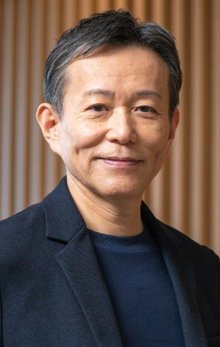
Toshiaki Tokunaga, Hitachi's CEO, says: "Deploying AI is only the beginning. The real challenge is making it work safely, effectively and reliably in complex physical environments."
Security risks in autonomous systems
Physical AI creates new attack surfaces as systems connect directly with operational technology. Legacy infrastructure in mission-critical sectors when integrated with autonomous decision-making capabilities, without proper security or governance is a recipe for disaster.
Hitachi is working with OpenAI to mitigate such risks as physical AI deployments accelerate. The companies' FDE teams will use OpenAI's Codex to analyse source code in legacy systems.
This could mean enhanced visibility into system design to support safer migration.
Tadao Nagasaki, President of OpenAI Japan, says: "Our work with Hitachi is an important step toward enabling the safer and more practical use of AI in Japan's critical industries and social infrastructure.
"OpenAI is committed to developing and deploying safe and beneficial AI, guided by our mission to ensure that AI benefits everyone."
According to Hitachi, the partnership will help protect against threats in environments where AI operates autonomously by capturing real-world conditions.
Google Cloud integration for threat protection
Hitachi will expand its alliance with Google Cloud to strengthen FDE capabilities. The partnership aims to accelerate deployment of cybersecurity solutions that protect against AI-generated threats.
"This partnership will better empower customers to implement AI agents and create value faster," says Thomas Kurian, CEO of Google Cloud.
"By integrating Google Cloud Security's advanced solutions with Hitachi's expertise in mission-critical domains, we will help enable our customers to innovate within a secure, trusted environment for the AI era."
The alliance will use Google Cloud Security technologies including Wiz for automated risk reduction. Wiz could provide comprehensive visibility into cloud and AI risks across infrastructure.
The teams will work with Hitachi's Frontier AI Deployment Center to enhance HMAX by Hitachi – which it describes as a next-generation suite of AI-powered solutions that helps drive social infrastructure innovation, by leveraging Gemini Enterprise.
Adoption rates across industrial sectors
According to Capgemini Research Institute, 79% of organisations it surveyed are already engaging with physical AI. The research shows 27% already deploy or scale solutions. Its study covered organisations with annual revenue above US$1bn, across 16 countries across North America, Europe, and Asia-Pacific and spanning 15 industries.
Data from the International Federation of Robotics shows more than 500,000 industrial robots were installed in 2024. The organisation estimates installations will surpass 700,000 units by 2028.
- 79% of organisations with annual revenue of more than US$1bn are already engaging with physical AI (Capgemini Research Institute)
- 500,000 industrial robots were installed in 2024 and we're on track to surpass 700,000 by 2028 (International Federation of Robotics)
Physical AI solutions are reaching commercial viability in sectors including automotive manufacturing, food and beverage production and semiconductor fabrication. Early adopters include FANUC, HD Hyundai, Honda, JLR, KION, Mercedes-Benz, MediaTek, PepsiCo, Samsung, SK hynix and TSMC.
These companies use NVIDIA's industrial software and tools to accelerate design, engineering and manufacturing processes. Hitachi partnered with NVIDIA to establish the Hitachi AI Factory based on NVIDIA AI Factory reference architecture in 2025.
Toshiaki says: "As Physical AI gains momentum in sectors such as energy, rail and industry, there's growing demand for FDEs to lead the implementation. Hitachi is meeting this demand."
Company portals



Executives

Tadao Nagasaki
President - OpenAI Japan

Thomas Kurian
CEO
Toshiaki Tokunaga
President & CEO