Inside NVIDIA's Open Secure AI Alliance Backed by Big Firms
Today’s software industry giants stand firmly on the shoulders of open source software.
It is a crucial element of modern cloud computing, financial services, telecommunications and many government and internet services.
The cybersecurity industry, in particular, owes a lot to open source and is among the top three beneficiaries of this accessible tech and knowledge.
Just as cyber played a leading role in securing the software at the time, the vital technology of today is AI.
And, to democratise AI security, there must be available open, frontier tools that the ecosystem can deploy with trust.
This is where Open Secure AI Alliance comes in.
NVIDIA and a host of founding members have formed an alliance to build up and share to the world open models and tools that give defenders all around the world the capability to secure AI.
Demonstrating the importance of such a coalition is the long chain of industry giants who are inaugural partners.
The list includes Adobe, Capital One, Cisco, Cloudflare, CrowdStrike, Databricks, Dell Technologies, HPE, Hugging Face, IBM, LangChain, the Linux Foundation, Microsoft, NetApp, OpenClaw, Palantir, Palo Alto Networks, Red Hat, Salesforce, ServiceNow, Siemens, Snowflake, SpacexAI, Thinking Machines Lab and TrendAI.
Why should AI security be open?
The main argument is of course democratisation of defence capabilities.
It also increases transparency for defenders and in NVIDIA’s words, “complement frontier closed models with customisable, localised controls”. The idea is community-driven defence.
NVIDIA takes us back to the recent Hugging Face security incident when a closed AI model blocked forensic analysis as it was unable to distinguish between attackers from defenders, it was in fact an open model – GLM 5.2, which was used to contain the intrusion.
The practical truth here is that if you do not have models that can be adapted based on necessity, “their ability to respond is constrained at exactly the moment speed matters most,” NVIDIA notes.
Tim Hudson, President of OpenSSL is best poised to comment on this issue.
He not only leads OpenSSL – the free, open-source software library that provides general-purpose cryptography and secures network communication, he was also part of co-authoring the code that became OpenSSL.
Tim believes that this development must not be viewed in isolation.
“NVIDIA's alliance is being launched under the banner of giving defenders open tools they can trust and control,” Tim says.
“I would put it more precisely, because precision is the whole point. Open source gives you complete control over your own deployment and none whatsoever over anyone else's.
“That is the deal. It has been the deal since the beginning.
“Twenty-five years of export controls on cryptography demonstrated that the alternative on offer is not control but the appearance of control, purchased with weaknesses that outlive the policy by decades.”
AI safety through open research
NVIDIA notes that security requires a comprehensive look across the entire agent stack including identity, permissions, harnesses, guardrails, logs and evaluation.
- Cybersecurity is among the top three beneficiaries of open source
- Without open models that can be adapted, the ability of defenders to respond is constrained at exactly the moment speed matters most
- NVIDIA notes that security requires a comprehensive look across the entire agent stack
These features can be tested, iterated on and improved by defenders if there are open harnesses and tools.
Many companies part of this coalition are already contributing to this project.
NVIDIA Labs Object-Oriented Agent (NOOA) is an open source project designed to make AI safety accessible for agent harnesses. It allows harnesses to integrate with the models better.
The NOOA framework also makes it easy to test, trace and govern agentic behaviour and is now available on GitHub.
Twenty-five years of export controls on cryptography demonstrated that the alternative on offer is not control but the appearance of control, purchased with weaknesses that outlive the policy by decades
HPE is backing open standards through SPIFFE/SPIRE to strengthen Zero Trust identity for AI, while Hugging Face has donated Safetensors to the PyTorch Foundation to improve model security.
IBM and Red Hat’s Lightwell adds digitally signed patches to secure the open source supply chain.
Microsoft’s MDASH uses multiple AI agents to uncover software vulnerabilities and SpaceXAI has open sourced its Grok Build coding agent, with plans to release Grok model weights.
The call for AI safety
NVIDIA called on companies and governments to invest in shared, open infrastructure for AI defence as in their words, the “future will not be secured by assuming that secrecy alone is safety”.

“It will be secured by building systems that are strong enough to withstand scrutiny, flexible enough to be improved and open enough to mobilise the full community of defenders,” NVIDIA says.
“That future is worth building – and the Open Secure AI Alliance invites governments, industry and researchers to join in the work of defending the AI era together.”
Company portals















Executives
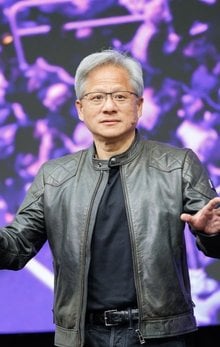
Jensen Huang
Founder and CEO
Tim Hudson
President