Mythos Showdown: Inside Dario Amodei's White House Talks

After its recent clash with the US Government over military use of AI, Anthropic is back at the White House, this time to discuss the implications of their most powerful AI model yet – Claude Mythos.
The White House's interest in the technology comes from the capability of Mythos to dig out thousands of vulnerabilities in commonly used software to create potent exploit chains.
Hence, should this model fall into the wrong hands, it would have dire consequences for cyber security.
AI visionary and Anthropic CEO Dario Amodei spoke to Treasury Secretary Scott Bessent and White House Chief of Staff Susie Wiles recently, where they discussed how the technology could achieve a balance between "advancing innovation and ensuring safety,” as a White House statement notes.

“We discussed opportunities for collaboration, as well as shared approaches and protocols to address the challenges associated with scaling this technology.”
Why does the Government want access to Mythos?
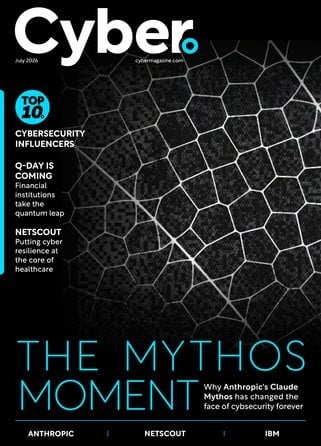
Anthropic has withheld the release of Claude Mythos to the public while erecting a pillar of security in the form of Project Glasswing – offering major industry players access to the model so as to secure critical software before such capability becomes widely accessed.
“AI models have reached a level of coding capability where they can surpass all but the most skilled humans at finding and exploiting software vulnerabilities,” a recent blog from Anthropic notes.
“The fallout – for economies, public safety and national security – could be severe.”
According to a Wall Street Journal report, the talk between the two may include giving “government agencies advance access to the model”.

“Anthropic has also been in ongoing discussions with US government officials about Claude Mythos Preview and its offensive and defensive cyber capabilities,” the company blog reads.
The AI giant says that “securing critical infrastructure is a top national security priority for democratic countries – the emergence of these cyber capabilities is another reason why the US and its allies must maintain a decisive lead in AI technology.
“Governments have an essential role to play in helping maintain that lead and in both assessing and mitigating the national security risks associated with AI models. We are ready to work with local, state and federal representatives to assist in these tasks.”
‘Changing the Math of Cybersecurity’
The relationship between the administration and Anthropic had soured earlier this year, following Anthropic's refusal to tear down AI safeguards for use in autonomous weapons or surveillance, which prompted the Pentagon, under Secretary Pete Hegseth, to label the company a “supply chain risk”.
The company is contesting the government’s actions through ongoing litigation in the federal courts, while its technology has also been used in military operations related to the conflict in Iran.
With this history, the renewed productive collaboration between the two signals the gravitas of the “AI vulnerability storm” that Mythos has created.
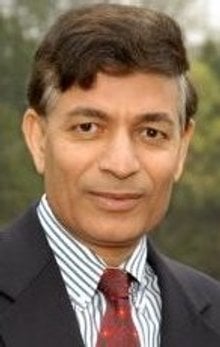
“Anthropic’s Mythos has changed the math of cybersecurity,” Jay Chaudhry, CEO, Chairman and Founder of Zscaler puts it in a recent LinkedIn post.
“Frontier models like these have democratised elite hacking, turning the ‘if’ of a breach into a ‘when'. In 2026, the reality is stark: AI doesn't just find vulnerabilities; it exploits them in minutes.
"My message to every leader is simple: If you can be reached, you will be breached. Traditional defences like VPNs and firewalls leave doors open for AI to pick. To survive, you must eliminate your attack surface entirely.
“You must ‘go dark’ by removing your applications from the open internet.”


Executives

Dario Amodei
CEO and Co-Founder
Jay Chaudhry
CEO, Chairman & Founder