This Week's Top Five Stories in Cyber
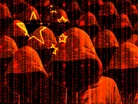
Inside a Chinese Espionage Campaign Targeting the Military
Right as the Middle-East uncertainty has put enterprise security teams on edge, with risks associated with cyber warfare, there is news of more chaotic cyber activity – this time, emerging from China.
“We identified a cluster of malicious activity targeting Southeast Asian military organisations, suspected with moderate confidence to be operating out of China,” reads the article by threat researchers Lior Rochberger and Yoav Zemah from Palo Alto Networks’ Unit 42.
These actors conducting state-sponsored activity were found to be ‘playing the long game’ with activity traced back to 2020.
The operation was aimed at “highly targeted intelligence collection” as the threat actors “searched for and collected highly specific files concerning military capabilities, organisational structures and collaborative efforts with Western armed forces.”
Fortinet: How to Protect Banking From Rising AI Cyber Risks
The financial services sector is a lucrative target for cybercriminals and, as such, is one of the most targeted.
The Fortinet Report on Cybersecurity for the Banking Sector in the Middle East and Africa 2026, reveals the true extent of the threats that the sector is currently up against.
The report paints a picture of escalating cyber risk that financial institutions across the Middle East and Africa are having to reckon with.
With the rate of AI-driven fraud operations skyrocketing by 1300%, digital and mobile banking services are on high alert for burgeoning AI backed identity impersonation, deepfakes and phishing.
“The cybersecurity industry often feels as if we’re being outrun by someone with a drastic advantage,” writes Dr Carl Windsor, CISO at Fortinet, in his a recent blog post.
How SailPoint Advances Identity Security for AWS's AI Agents
With businesses across the global economy embracing AI, managing risks and establishing proper governance are top of the agenda.
This is the case with Amazon Web Services (AWS), which is now moving to deepen its relationship with SailPoint, with the two firms having struck a new strategic collaboration agreement. This speaks to AWS's clear ambition to redefine how identity security operates in cloud first environments.
The deal builds on years of integration work between the two companies, but takes a more deliberate step towards joint innovation, particularly in areas driven by AI and agents.
“The proliferation of AI agents is creating a new class of non-human identities and each one represents a new attack surface,” says Mark McClain, CEO & Founder of SailPoint.
“For AI to be a true business accelerant, it must be built on a foundation of security.”
Why Has the EU Sanctioned Firms from China and Iran?
When geopolitics is volatile, state-backed cyber activity stirs up.
In response to these advancing threats, the European Union has rained down sanctions on three companies and two individuals involved in cyberattacks against EU member states and its partners.
The blacklisted entities and individuals will now be subject to asset freezes and travel bans across EU territories.
Two China-based companies are among those sanctioned – Integrity Technology Group and Anxun Information Technology. These two companies were previously sanctioned by the UK.
Integrity Technology Group, the EU says “has routinely provided products used to compromise and access devices in EU member states, across Europe and worldwide”.

Rapid7 Report: Critical-Severity Vulnerabilities Rise 105%
With AI tools in their bank, cyber attackers are moving faster than ever and businesses are struggling to keep pace.
That is the central warning from Rapid7 in its latest research, The 2026 Global Threat Landscape Report: Decoding the Accelerated Cyber Attack Cycle.
The report reveals a stark shift in how quickly cyber threats evolve.
What was once a window of weeks for defenders to respond has now narrowed to just days, leaving organisations with far less time to react.
At the same time, the volume of exploited vulnerabilities is surging.
Company portals




Executives
Dr Carl Windsor
Chief Information Security Officer (CISO)
Mark McClain
CEO & Founder