Cyber Attack Reveals Fragile Airline Vendor Dependencies
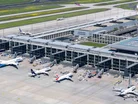
A ransomware attack targeting Collins Aerospace’s check-in and boarding systems – which brought operations to a standstill at major hubs in Heathrow, Brussels and Berlin – has triggered widespread disruption across Europe and further afield, while simultaneously exposing underlying weaknesses within critical aviation networks.
Cybersecurity specialists now warn that although the immediate fallout was severe, the longer-term implications highlight the need for solutions that extend well beyond repairing the systems initially compromised.
Exposing aviation’s supply chain risks

Cody Barrow, CEO of EclecticIQ, characterises the incident as a stark reminder of the aviation sector’s fragile reliance on a small pool of third-party providers.
“By targeting a single vendor, attackers were able to disrupt airports across multiple countries,” he points out, describing the event as a textbook case of supply chain risk in action.
Cody urges aviation stakeholders and regulators to prioritise cyber resilience with the same rigour and urgency that has traditionally been applied to physical safety.
He adds: “That means building redundancy, running realistic contingency exercises and ensuring threat intelligence flows quickly between partners.
“We should expect incidents like this to become more frequent and the sector must treat cyber resilience with the same urgency as physical safety.”
The incident also underscores the ageing technology infrastructure that supports today’s air travel, notes Matt Saunders, Field CTO at Adaptavist.
“When the entry point of a major cyber attack is still unknown, scrutiny will inevitably fall on weak spots in the everyday systems used by millions of passengers and whether their personal data has been involved,” Matt shares.
“Copycat attacks are almost guaranteed to follow, as seen this year, with JLR and M&S facing significant downtime and financial loss following social engineering cyber breaches.
“The aviation sector is particularly exposed as it leans heavily on ageing, legacy systems never designed for today’s cyber threatscape.
“They are an open target and we’ve already seen the attack start to spread across Europe.”
As investigations work to identify the attack’s entry point, his guidance serves as a clear warning to IT teams across all sectors: strengthen social engineering defences, ensure prompt patching, and be ready to withstand secondary assaults.
The critical role of contingency planning
On the ground, the disruption underscores the extent to which airports and airlines depend on digital systems for convenience and efficiency.
Mantas Sabeckis, a white hat hacker and infosec researcher, notes that the fallback to manual processes and paper-based backups – including handwritten boarding passes and flight manifests – served as a vital safety net during the digital outages.
“This past weekend, millions of travelers faced a modern nightmare: delays, cancellations and chaos,” he says.
“It’s very much the reality of today’s hyperconnected infrastructure. This shows how hidden cyber risks can be.
“It also shows how unprepared many important systems are for these kinds of threats.”
Although considered “crude,” these contingency measures were vital in keeping operations running under pressure.
Mantas emphasises the critical role of vendors’ security practices – from rapid patch management to clear vulnerability disclosures – stressing that genuine resilience demands end-to-end supply chain vigilance, not solely internal IT fortification.
He continues: “This hack blew up the digital convenience airports pride themselves on: automated check-ins, seamless boarding.
“A flaw in one vendor’s software can cascade through the global transportation ecosystem, unleashing disruption across an entire continent.
“The lesson here is that just making your own computers and firewalls stronger isn’t enough.”
Other cybersecurity leaders highlight that the incident reflects shifting dynamics in cyber conflict, with terrorism law watchdog Jonathan Hall KC cautioning that state-sponsored involvement cannot be discounted amid rising geopolitical tensions and the strategic significance of airports as prime targets.
This reinforces the urgency of treating aviation cybersecurity not merely as a technical issue, but as a critical national and international security priority.
The need for collaborative resilience
From a regulatory and strategic standpoint, James Griffin, CEO of CyberSentriq, argues that the attack must serve as a wake-up call to move past treating resilience as a mere compliance exercise.
He points to forthcoming measures such as the UK’s Cyber Security and Resilience Bill, which seeks to expand oversight to cover suppliers and service providers, as a step in the right direction.
However, James cautions that regulation by itself will fall short without a broader industry shift toward collective responsibility – where organisations proactively manage vendor risk, rigorously test incident response plans, and actively share threat intelligence across sectors.
“The disruption at Europe’s airports proves that cyber resilience is not an abstract concept, it is a business and societal necessity,” he says.
“However, regulation alone is not a silver bullet. The industry itself must embrace collective responsibility, where every organisation takes ownership of its role in safeguarding data, services and ultimately, trust.
“Too few businesses actively monitor or assess their suppliers’ cyber resilience – this creates blind spots attackers can exploit with devastating efficiency, as has been seen this last week.
“However, the airline sector is not an outlier – similar flaws exist across government, finance, healthcare and retail. A single exploited flaw can cascade into widespread disruption.
“Companies must map and continuously review their vendors and demand evidence-based security assurances from third parties and test backup and incident response plans.”
Dominic Ryles, Sales and Alliance Director at Exertis Cybersecurity, echoes this sentiment, calling the incident a stark illustration of the systemic risks that arise when trusted third parties are breached.
His firm advocates for a holistic strategy that integrates thorough vendor risk assessments, continuous monitoring, incident response preparedness and resilient backup practices.
He says: “For many organisations, the infrastructure they rely on isn’t fully under their control. That means a weakness somewhere in your supply chain or a vendor’s software can be just as dangerous as a breach inside your own network.
“When things go wrong, every minute of downtime costs more than just money – it damages trust.”