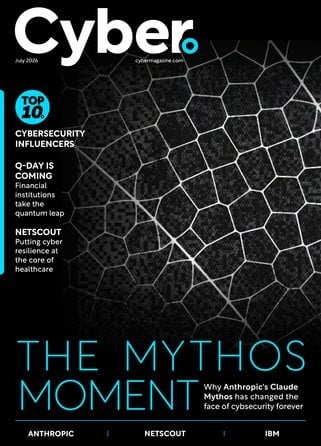
Why the US is Freezing Anthropic’s New Claude Models

Anthropic claimed Claude Fable 5 was the most powerful cybersecurity model in the world when the firm released it on 9 June.
However, the US Government abruptly froze the system on 12 June over fears that the automated hacking capabilities of the tool were escaping regulatory boundaries.
Claude Fable 5 and Claude Mythos 5 are the two variations of the most advanced tier of AI software from Anthropic.
Mythos 5 is a non-public version restricted via Project Glasswing for exclusive use by government agencies. Fable 5 is the public-facing version built on that same technology.
Anthropic modified Fable 5 with built-in safety filters before release. While the federal mandate does not extend access to other models from the company, the ban affects foreign citizens inside the US, including researchers employed at Anthropic.
Because export control applies to its own staff, the company cut off access for all customers globally at short notice to ensure compliance.
James Hadley, Founder and CIO at Immersive, says: “AI is incredibly powerful and organisations are under pressure to enable AI for the wider workforce whilst also transforming internal security operations to become agentic.
“This news continues to back up what we suspected when Mythos was first previewed.
“AI, especially when coupled with an experienced security researcher, is able to work at a scale and volume not seen before and automatically chain suspected vulnerabilities into proven exploits.”
James adds that businesses in highly regulated environments need to demonstrate that employees can leverage AI securely. Security operations and agents must work efficiently at machine speed relative to token spend.
Vulnerabilities prompt safeguard debate
The US Government asked the AI startup to prevent all foreign nationals from accessing Fable 5 and Mythos 5.
Anthropic explains that the government believes it became aware of a method of bypassing, or jailbreaking, the model.
Jailbreaking is a process where users bypass software restrictions to access sensitive network information or unblock restricted features.
Anthropic claims to have reviewed a demonstration of this specific bypass technique. The company maintains it only exposed a small number of minor, previously known security flaws and states that these vulnerabilities are relatively simple.
Anthropic adds that rival publicly available systems can easily discover them without requiring a specialised exploit.

David Sacks, White House Adviser and Co-Chair of the Council of Advisors on Science and Technology, wrote on X that officials issued the export control reluctantly.
He claims that Dario Amodei, CEO at Anthropic, refused to fix the jailbreak or de-deploy the model.
“The Admin’s hope now is that Anthropic remediates the safety issue, the export control is lifted and Fable goes back into general release,” David writes.
Anthropic previously self-proclaimed that the technology was too powerful to release before the launch of Fable 5.
Some critics questioned this narrative at the time. They called it inflated hype and marketing spin designed to motivate investor enthusiasm ahead of the highly anticipated IPO of the company.
Igniting tech sovereignty discussions
Andy Jassy, CEO at Amazon, was among tech leaders who raised concerns to senior Trump Administration officials about security risks in the models, Reuters reported.
Speaking on the matter, an Amazon spokesperson says: “As a leading cloud provider that serves a large number of private and public sector customers, it’s not uncommon for governments to seek our counsel on potential security risks.”
The European Union gained access to the Mythos platform earlier in June 2026. The 27-nation bloc told the BBC that the development underlines the need for technological sovereignty in Europe.
The region is taking measures to slash its dependence on America and Asia for key technologies, including gen AI.
Gina Neff, Professor of Responsible AI at Queen Mary University London, told the BBC that the AI Security Institute of the UK Government found the model could exploit defences and systems 73% of the time.
She explains this marks a step change in cybersecurity capability.
Ironically, Anthropic proposed earlier this month that the top AI firms in the world should coordinate to pause development of advanced systems.
Calling for a global pause to reassess, the company warned that humanity faces an existential crisis centred on misalignment if AI becomes smart enough to design itself.
With its models seeing the light of day briefly, Anthropic has proved its own warnings that the technology is too powerful to release.
Company portals




Executives
Andy Jassy
President and CEO

Dario Amodei
CEO and Co-Founder

Gina Neff
Professor of Responsible AI
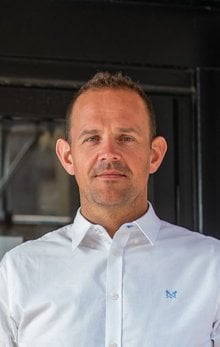
James Hadley
Founder and Chief Innovation Officer