
Top 10: Cybersecurity Companies in BFSI

Industrialised cybercriminal operations are on a rampage, with new cyber attacks projected to occur every 39 seconds, according to data from the University of Maryland.
When it comes to the banking, financial services and insurance (BFSI) sector, this translates to thousands of sophisticated, targeted probes every hour.
Notable incidents in 2025 included: the billion dollar Bybit theft by the Lazarus Group, which saw US$1.5bn in Ethereum evaporate; the Global Bank Network Supply Chain Breach of 2025, in which millions was stolen through unauthorised transactions; and the MegaCorp data leak, which triggered a tsunami of identity theft after 20 million credit card and other details were stolen.
Financial institutions therefore require world class protection to stay ahead of threats, leveraging AI and modern technologies to stop bad actors in their tracks.
Here, Cyber Magazine shines light on the cybersecurity firms best equipped to serve the BFSI sector.
10. Trend Micro
- Category: Hybrid cloud & virtual patching
- Headquarters: Tokyo, Japan / Irving, Texas
- CEO: Eva Chen
- Revenue: ~US$1.8bn
Trend Micro secures a unique position in the banking sector with its ability to protect both modern cloud apps and critical legacy infrastructure.
Its Vision One platform has evolved into an ASPM (application security posture management) powerhouse.
The company delivers virtual patching – a vital capability that shields vulnerable mainframes and older Windows servers from exploits without needing a system reboot.
This feature is essential for financial institutions running core banking systems that cannot face downtime. Trend Micro effectively bridges the gap between on-premise data centres and secure cloud environments like AWS and Azure, ensuring compliance across hybrid networks.
9. Okta
- Category: Identity & access management (IAM)
- Headquarters: San Francisco, California, USA
- CEO: Todd McKinnon
- Revenue: ~US$2.7bn

In the era of open banking and fintech integration, Okta serves as the primary line of defence for identity security. Banks use Okta to secure open banking APIs, ensuring that third-party fintech apps accessing customer data are verified.
Moving beyond simple SSO, Okta’s 2026 focus is identity threat detection and response (ITDR).
The Okta Workforce Identity Cloud ensures that only verified employees can access sensitive financial portals, SWIFT terminals and trading platforms. By preventing credential theft – the leading cause of data breaches in finance – Okta allows banks to adopt a secure zero trust posture.
Its latest AI identity protection proactively blocks sophisticated "deepfake" biometric bypass attempts during customer onboarding.
8. Splunk (A Cisco Company)
- Category: SIEM & unified observability
- Headquarters: San Jose, California, USA
- CEO: Chuck Robbins (Cisco CEO)
- Revenue: ~US$4.2bn (Cisco - US$50bn)
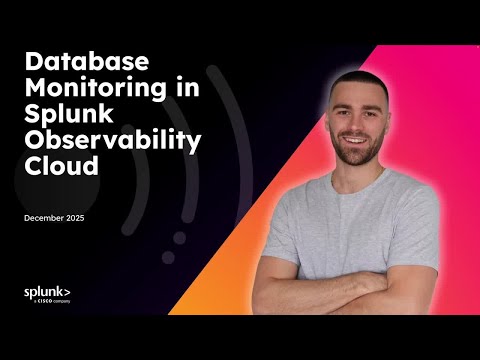
Post-acquisition, Splunk is now integrated with Cisco’s Talos Intelligence. For a modern SOC (security operations center), this means the bank’s network hardware and its security logs are finally 'talking'.
Banks are utilising Splunk’s new Agentic AI to automatically investigate 70% of low-level fraud alerts without human intervention.
The platform processes massive volumes of log data to meet strict regulatory audit requirements such as PCI-DSS, SOX and Basel III.
It is the definitive tool for compliance officers and security analysts needing total visibility into data flows across a global banking network.
7. Check Point Software
- Category: AI-powered threat prevention
- Headquarters: Tel Aviv, Israel
- CEO: Nadav Zafrir
- Revenue: ~US$2.6bn
Check Point Software is the preferred security partner for conservative financial institutions that prioritise network stability and proven prevention capabilities.
Its Infinity architecture focuses on AI-led, pre-emptive blocking rather than just detection, offering the highest catch rates for known and unknown threats.
Its 2026 Quantum-Safe VPN modules are currently being trialled by investment banks to protect high-frequency trading data against future quantum decryption threats.
For central banks and clearing houses where even a second of downtime can disrupt markets, Check Point’s reputation for unbroken uptime and rigorous code quality makes it a trusted standard for high-security environments.
6. Proofpoint
- Category: Email security & insider threat protection
- Headquarters: Sunnyvale, California, USA
- CEO: Sumit Dhawan
- Revenue: ~US$2bn+
Proofpoint provides critical defence for the BFSI sector where over 90% of sophisticated attacks begin with a phishing email.
The company specialises in stopping business email compromise (BEC) – a technique where attackers impersonate executives to authorise fraudulent wire transfers.
In addition to email security, Proofpoint offers robust insider threat management to monitor staff for suspicious data exfiltration.
This is particularly vital for wealth management firms needing to prevent sensitive client lists from leaving the organisation with departing employees. In 2026, they have expanded into AI data governance, specifically helping wealth management firms monitor and redact sensitive PII (personally identifiable information) in real-time within Microsoft Teams and Zoom calls.
5. Fortinet
- Category: Branch security & SD-WAN
- Headquarters: Sunnyvale, California, USA
- CEO: Ken Xie
- Revenue: ~US$6.5bn (Est. FY2025)

Fortinet is the dominant security provider for retail banking networks and insurance field offices.
Its flagship FortiGate solution combines next-generation firewalling with Secure SD-WAN in a single appliance, allowing banks to secure thousands of remote branches and ATMs cost-effectively.
Fortinet offers high-performance encryption and threat protection at a price point that competitors cannot match.
This scalability makes it the ideal choice for regional banks and credit unions expanding their digital footprint without compromising on security. In 2026, they are winning on OT Security, protecting the physical building management systems and vaults of physical bank locations.
4. Zscaler
- Category: Secure access service edge (SASE)
- Headquarters: San Jose, California, USA
- CEO: Jay Chaudhry
- Annual Recurring Revenue: ~US$3.2bn
Zscaler is revolutionising secure access for financial advisors and remote banking staff by replacing dangerous legacy VPNs.
The Zscaler Zero Trust Exchange acts as an intelligent switchboard in the cloud, securely connecting users to specific applications without ever placing them on the corporate network. This architecture significantly reduces the attack surface and helps banks comply with GDPR and local data residency laws.
Its new AI Red Teaming service (via the SPLXAI acquisition) helps banks stress-test their internal gen AI bots for data leaks.
It is the leading solution for financial enterprises moving towards a cloud-first model while ensuring remote workers remain secure from internet-borne threats.
3. Symantec (A Broadcom Company)
- Category: Data loss prevention (DLP) & web security
- Headquarters: San Jose, California, USA
- CEO: Hock Tan (CEO of Broadcom)
- Revenue: ~US$63.89bn (Revenue of Broadcom)
Symantec remains a the gold standard of security for the big four global banks, particularly for its world-class data loss prevention (DLP) and proxy services.
Now part of Broadcom, financial institutions rely on Symantec Enterprise to classify and block sensitive information – such as credit card numbers and PII – from leaving the network.
Despite market consolidation, its policy engine is so granular and deeply embedded in legacy compliance workflows that it remains the industry standard for preventing data leaks in highly regulated banking environments.
Their software is deeply baked into the SWIFT and clearing house protocols of global banks. If a bank needs to guarantee that a 16-digit credit card number never leaves its network, they likely use Symantec.
2. CrowdStrike
- Category: Endpoint detection & response (EDR)
- Headquarters: Austin, Texas, USA
- CEO: George Kurtz
- Annual Recurring Revenue: ~US$4.92bn

CrowdStrike is the essential defence against ransomware for the modern banking sector.
Its Falcon platform acts as a high-fidelity flight recorder for every endpoint, protecting everything from ATM controllers to investment banking laptops.
Meanwhile, the Falcon Flex model allows banks to swap modules (like Cloud Security or Next-Gen Antivirus) on the fly.
In 2026, Charlotte AI is the primary tool being used by bank analysts to hunt for nation-state actors targeting financial liquidity.
For an industry built on trust, CrowdStrike provides the assurance that breaches can be isolated in seconds – preventing the catastrophic data leaks and reputational damage that threaten financial stability.
1. Palo Alto Networks
- Category: Network & cloud security leader
- Headquarters: Santa Clara, California, USA
- CEO: Nikesh Arora
- Revenue: ~US$5.9bn
Palo Alto Networks stands as the undisputed leader for tier-1 financial institutions requiring uncompromising network security.
By acquiring CyberArk in late 2025, Palo Alto now controls both the network and the privileged access for the world’s largest banks.
Its Cortex XSIAM platform is the current industry benchmark for replacing traditional SIEMs, offering banks a self-healing network that can isolate an infected server in under 10 seconds.
The Cortex and Strata portfolios provide deep inspection of encrypted high-frequency trading traffic without introducing latency.
The platform leverages AI to automate security operations, enabling banks to replace manual SOC tasks with machine-speed remediation.
Offering the most comprehensive portfolio for securing hybrid data centres, Palo Alto Networks is the de facto standard for protecting the global financial infrastructure.
Company portals









Executives

Chuck Robbins
Chair and CEO

Eva Chen
George Kurtz
President / CEO & Founder
Hock Tan
President and Chief Executive Officer
Jay Chaudhry
CEO, Chairman & Founder

Ken Xie
Founder, Chairman of the Board, and Chief Executive Officer (CEO)
Nadav Zafrir
Chief Executive Officer
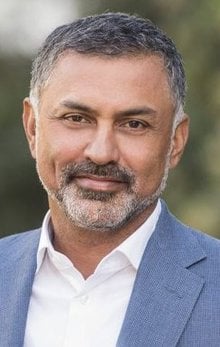
Nikesh Arora
Chairman CEO
Sumit Dhawan
CEO

Todd McKinnon
CEO and co-founder







- JadePuffer: Sysdig Sniffs Out the First Agentic RansomwareHacking & Malware
- Bear Necessities: Google on The Russian Sphere of InfluenceCyber Security
- Top 10: Security Information and Event Management PlatformsCyber Security
- Recorded Future & Wipro Boost Enterprise Threat IntelligenceCyber Security