Top 10: Leaders in Cybersecurity
In an era defined by relentless digital transformation, the cybersecurity industry has become ground zero for some of the most consequential leadership decisions in modern business. Nation-state adversaries, ransomware syndicates and supply chain vulnerabilities have elevated the CISO's mandate, and with it, the stakes for the executives building the platforms that stand between civilisation and chaos.
The companies that dominate this landscape are essential infrastructure for governments, Fortune 500 corporations and the global financial system alike. Behind each of these organisations is a leader who navigated the brutal compression of threat cycles, investor pressure and technological upheaval.
From cloud-native disruptors to legacy stalwarts reinventing themselves under new leadership, the figures on this list represent the full spectrum of cybersecurity ambition.
10. Vincent Pilette, Gen Digital
Founded: 2022 (Merger of NortonLifeLock and Avast)
HQ: Arizona, US
Services: Consumer cybersecurity, identity protection, privacy
Vincent Pilette inherited a complex mandate when NortonLifeLock rebranded as Gen Digital following its acquisition of Avast: unite a sprawling consumer security portfolio spanning Norton, Avast, AVG, and LifeLock under a single coherent identity.
The Belgian-born executive, who cut his teeth in finance and operations at HP, has proved a deft hand at post-merger integration, streamlining go-to-market strategies and doubling down on subscription revenue. His focus on the consumer segment – often dismissed as unglamorous compared to enterprise security – has remained resolute.
Vincent argues persuasively that protecting individual digital lives is foundational societal infrastructure, not a commodity play. That conviction is slowly converting skeptics as identity theft and privacy threats escalate globally.
9. Dr. Tom Leighton, Akamai
Founded: 1998
HQ: Massachusetts, US
Services: CDN, cloud security, DDoS protection, edge computing
Few executives in technology can claim that the company they lead grew directly from their own academic research – but Dr. Tom Leighton is one of them. The MIT mathematician co-founded Akamai on the theoretical underpinnings of distributed computing and his scientific rigor has never left the building.
Under his stewardship, Akamai has navigated one of the more complex pivots in enterprise technology: transitioning from a content delivery network into a full-spectrum cloud security powerhouse without losing its existing customer base.
Tom's credibility as an architect of the modern internet grants him a rare authority when speaking to governments and enterprise customers about edge-based threat mitigation. The transition is ongoing, but Akamai's security revenue trajectory suggests he has read the market correctly.
8. Nadav Zafir, Check Point Software
Founded: 1993
HQ: Tel Aviv, Israel
Services: Network security, threat intelligence, cloud security
Nadav Zafrir is the CEO of Check Point Software, succeeding founder Gil Shwed. A former commander of Unit 8200, Israel’s elite cyber intelligence agency, Nadav transitioned to the role with a background in high-stakes operational security and venture capital.
His primary mandate is to modernise the company's legacy reputation by competing against cloud-native rivals.
Nadav's strategy emphasises AI-powered threat prevention and platform consolidation. By prioritising these technologies, he aims to position Check Point more aggressively against competitors like Palo Alto Networks and CrowdStrike, signalling a shift from defensive market preservation to active growth and innovation.
7. François Locoh-Donou, F5
Founded: 1996
HQ: Washington, US
Services: Application security, multi-cloud networking, API security
François Locoh-Donou became CEO of F5 in 2017, joining from Ciena. He has led the company’s transition from a hardware-centric application delivery vendor to a multi-cloud application security and networking provider.
To execute this pivot, François oversaw the strategic acquisitions of NGINX and Shape Security, with a focus on high-growth sectors such as API security and bot mitigation.
These moves integrated F5 into software-defined environments and expanded its presence across diverse cloud architectures. His leadership is characterised by consolidating a complex technical portfolio into a unified security narrative, repositioning the company to address modern, cloud-based threat surfaces.
6. Jay Chaudhry, Zscaler
Founded: 2007
HQ: California, USA
Services: Zero Trust architecture, SASE, cloud security
Jay Chaudhry is the founder and CEO of Zscaler, which he established in 2007. His leadership is based on the early rejection of perimeter-based security in favour of a Zero Trust architecture. This model proved highly-effective as enterprises shifted toward cloud migration and remote work.
Born in India and educated at IIT (BHU) and the University of Cincinnati, Jay's background informs his approach to scaling the company.
Zscaler’s Zero Trust Exchange is now a standard architecture for secure digital transformation. His current focus involves maintaining market growth and navigating competition from larger diversified technology firms while scaling Zscaler’s cloud-native security platform.
5. Thomas A. Bell, Leidos
Founded: 1969
HQ: Virginia, US
Services: Defence IT, national security, cyber operations
Thomas A. Bell is the CEO of Leidos, a major defence contractor providing cybersecurity and digital modernisation for the U.S. Department of Defence, the intelligence community and federal agencies. His leadership is informed by his background as a retired U.S. Army General and former Deputy Director of the National Security Agency (NSA).
Thomas' strategy focuses on securing large-scale government contracts and integrating AI into national security infrastructure. Unlike commercial-focused firms, Leidos operates primarily within the public sector, managing sovereign cybersecurity programmes
Under Thomas, the company has expanded its portfolio to address complex threats against critical government systems and digital modernisation requirements across the federal landscape.
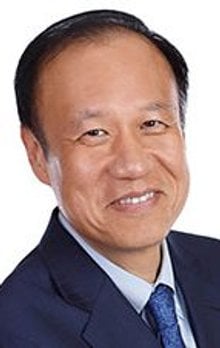
4. Ken Xie, Fortinet
Founded: 2000
HQ: California, US
Services: Network security, firewalls, SD-WAN, OT security
Ken Xie is the co-founder and CEO of Fortinet, having previously co-founded SonicWall.
An engineer by background, Ken's leadership is defined by a focus on hardware-accelerated security. He pioneered the use of proprietary ASICs (Application-Specific Integrated Circuits) to enhance processing performance and cost efficiency, a technical strategy that remains a core differentiator for the company.
Under Ken, Fortinet has expanded beyond traditional network security into operational technology (OT) and critical infrastructure markets. This engineering-led approach has resulted in high profit margins and a broad global footprint.
Ken remains a central figure in the company’s product architecture, maintaining a focus on integrated security fabric across diverse vertical and geographic markets.
3. Matthew Prince, Cloudflare
Founded: 2000
HQ: California, US
Services: DDoS protection, SASE, Zero Trust, developer cloud
Matthew Prince is the co-founder and CEO of Cloudflare, which he has scaled from a startup into a global connectivity cloud. Under his leadership, the company's network has expanded to more than 300 cities, handling approximately 20% of all internet traffic.
Matthew leverages this massive infrastructure to provide integrated security, performance and edge computing services. His strategy emphasises transparency and data-driven communication, using real-time threat intelligence to influence global internet policy.
Recently, he has focused on edge AI and tools for content rights management, positioning Cloudflare as a foundational layer for both enterprise security and the evolving AI ecosystem.
2. George Kurtz, CrowdStrike
Founded: 2011
HQ: Texas, US
Services: Endpoint security, threat intelligence, incident response
George Kurtz is the Co-founder and CEO of CrowdStrike – the leading AI-native cybersecurity company, that he established after serving as the CTO of McAfee. He is credited with pioneering cloud-native endpoint detection and response (EDR), moving the industry away from legacy, on-premise security architectures toward the Falcon platform.
George has more than three decades of experience in the security industry and is a prominent speaker and author of the best selling security book: Hacking Exposed: Network Security Secrets & Solutions.
George has won many industry recognitions including EY's Entrepreneur Of The Year Award in the security category in Northern California, the Philippe Courtot Leadership Award for 2025 by the Cloud Security Alliance (CSA) and was named CEO of the Year by Evolution Equity Partners.
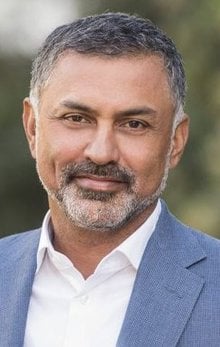
1. Nikesh Arora, Palo Alto Networks
Founded: 2005
HQ: California, US
Services: Network, cloud & AI-powered security; SASE; SOC automation
Nikesh is Chairman and CEO of Palo Alto Networks, where he has led an aggressive 'platformisation' strategy since joining from SoftBank in 2018. His thesis focuses on consolidating fragmented security tools into integrated platforms – Strata (network), Prisma (cloud) and Cortex (operations).
By 2026, Nikesh has solidified this transition through multi-billion-dollar acquisitions, including CyberArk for identity and Chronosphere for observability. Under his leadership, the company’s Next-Generation Security ARR has surpassed US$6.3bn.
Despite initial market scepticism toward his bundling tactics, Nikesh's focus on AI-driven security operations and "precision AI" has positioned Palo Alto Networks as a dominant "cybersecurity operating system" for global enterprises.
Company portals









Executives
François Locoh-Donou
President and CEO
George Kurtz
President / CEO & Founder
Jay Chaudhry
CEO, Chairman & Founder
Ken Xie
Founder, Chairman of the Board, and Chief Executive Officer (CEO)
Matthew Prince
CEO & Co-Founder
Nadav Zafrir
Chief Executive Officer
Nikesh Arora
Chairman CEO
Tom Bell
Chief Executive Officer

Tom Leighton
Chief Executive Officer
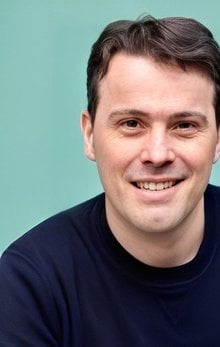
Vincent Pilette
CEO