Top 10: Threat Intelligence Companies

The contemporary digital landscape is dotted with complex cyber threats forming an unforgiving reality for corporate security teams.
With AI to aid them, advanced persistent threat groups orchestrate campaigns with industrialised precision to automate exploitation at machine speed.
This cyber reality mandates high quality threat intelligence as a critical necessity for enterprises, lest they be trapped in reactive defence loops that guarantee failure against modern adversaries. Recent catastrophic events perfectly illustrate this escalating danger.
State-sponsored attacks against organisations have continued to cause panic, with China-linked groups such as Salt Typhoon conducting long-term intrusions into US telecommunications and technology firms for intelligence collection, while Volt Typhoon has targeted critical infrastructure organisations including energy, transport and water systems for potential pre-positioning and disruption.
To help safeguard enterprises in this hostile cyberspace, Cyber Magazine has put together the list of Top 10 threat intelligence companies globally.
10. Fortinet
Headquarters: California, US
CEO: Ken Xie
Revenue: US$6.8bn (2025)
Fortinet continues to showcase dominance in the cyber defence arena through its elite FortiGuard Labs – its global threat intelligence and research division.
The firm processes vast volumes of global telemetry data to identify emerging threats and distribute countermeasures rapidly.
Its robust portfolio natively integrates advanced artificial intelligence and machine learning across its security portfolio to help detect sophisticated malware, while also offering content disarm and reconstruction capabilities.
The company is widely recognised for combining networking and security functions through its integrated Security Fabric platform across enterprise environments
9. Cyble
Headquarters: Georgia, US
CEO: Beenu Arora
Revenue: Not Publicly Disclosed

Cyble operates as a fiercely innovative cybersecurity company specialising in digital risk protection and threat intelligence.
The company leverages its proprietary Blaze AI engine to provide agentic threat analysis that goes far beyond passive monitoring.
Its Cyble Vision platform provides continuous monitoring across the surface web, deep web and dark web to help organisations identify exposed assets, stolen credentials and emerging vulnerabilities.
Cyble’s services are designed to help security teams detect and respond to threats earlier in the attack lifecycles, before malicious actors can successfully weaponise them.
8. Anomali
Headquarters: California, US
CEO: Ahmed Rubaie
Revenue: Not Publicly Disclosed ~US$57.1m (Source: Prospeo)

Anomali transforms raw data feeds into an active decision-making layer for security operations centres worldwide.
Its ThreatStream platform integrates threat intelligence, analytics and AI-assisted workflows within a unified data environment to support faster alert triage and incident response.
The California-based company focuses on helping security operations teams identify emerging attack patterns, prioritise threats and improve response efficiency.
7. Flashpoint
Headquarters: New York, US
CEO: Josh Lefkowitz
Revenue: Not Publicly Disclosed (~US$100-250m)
Flashpoint serves as a vital intelligence hub for high-stakes environments ranging from global financial institutions to government organisations.
The company monitors illicit online communities, including dark web forums and criminal marketplaces, to help clients identify stolen credentials, emerging threats and coordinated malicious activity.
Its flagship Ignite platform seamlessly fuses digital risk monitoring with physical security insights to offer a truly holistic defence posture.
Flashpoint also offers multilingual intelligence capabilities designed to improve visibility into global underground networks.
6. ZeroFox
Headquarters: Maryland, US
CEO: David Muse
Revenue: US$233.3m (2024)
ZeroFox redefines modern brand protection by securing corporate assets far beyond the traditional network perimeter.
Its platform monitors for phishing campaigns, credential leaks, impersonation attempts and brand abuse across digital channels.
The company recently transitioned to private ownership under Haveli Investments and continues to aggressively scale its software-as-a-service offerings.
ZeroFox is commonly used by enterprises seeking earlier detection and mitigation of threats that could affect brand reputation and customer trust.
5. Palo Alto Networks
Headquarters: California, US
CEO: Nikesh Arora
Revenue: US$9.22bn (2025)

Palo Alto Networks commands tremendous respect through its world-renowned Unit 42 research division.
The cybersecurity giant collects massive volumes of telemetry across its interconnected product ecosystem to curate high-fidelity adversary insights.
By mapping out advanced systemic vulnerabilities like certificate misconfigurations it delivers actionable prevention strategies directly to enterprise defenders.
Palo Alto Networks promotes a platform-based security model designed to help enterprises consolidate tools, improve visibility and streamline security operations through integrated prevention and detection capabilities.
4. Microsoft
Headquarters: Washington, US
CEO: Satya Nadella
Revenue: US$282.1bn (2025)
Microsoft leverages an unparalleled global footprint to process trillions of daily security signals and identify emerging threats and attacker activity.
Microsoft has increasingly integrated Defender Threat Intelligence capabilities with the broader Microsoft Sentinel security operations platform to provide analysts with unified access to threat intelligence and investigation tools.
The company’s platform-centric approach aims to reduce operational complexity by consolidating security workflows within a single ecosystem.
Microsoft security products also support automated blocking of malicious domains, URLs and other threat indicators to improve incident response efficiency.
3. Mandiant
Headquarters: Virginia, US
CEO: Thomas Kurian (Google Cloud CEO)
Revenue: ~US$70bn (2025)

Mandiant operates as the elite investigative arm within the broader Google Cloud security portfolio.
Following the transition of founder Kevin Mandia to an advisory role, the company has continued integrating its frontline investigative expertise with Google Cloud’s security operations capabilities.
Its analysts possess profound knowledge of state-sponsored espionage tactics and complex cybercriminal networks based on real-world breach investigations.
Google has also incorporated Gemini AI capabilities into parts of its security ecosystem to help analysts prioritise risks and accelerate threat investigations.
2. CrowdStrike
Headquarters: Texas, US
CEO: George Kurtz
Revenue: US$5.25bn (2025)
CrowdStrike stands as an absolute juggernaut in the contemporary cybersecurity landscape, known for its cloud-native Falcon platform and its focus on endpoint detection and response.
Security teams benefit immensely from the Counter Adversary Operations unit, which conducts relentless human-led threat hunting to unearth the most evasive network intrusions.
CrowdStrike also incorporates AI-driven automation and response features designed to help organisations detect, investigate and contain threats more quickly.
As cyber attacks become increasingly automated and sophisticated, the company positions its platform around improving the speed and efficiency of enterprise security operations.
1. Recorded Future
Headquarters: Massachusetts, US
CEO: Colin Mahony
Revenue: ~US$250m (surpassed US$250m in 2022, Revenue not publicly disclosed)

Recorded Future secures the premier position and is widely recognised as a leader in threat intelligence platforms, most notably through repeated placement as a Leader in Forrester Research Wave evaluations for Threat Intelligence Platforms.
Recently acquired by Mastercard the organisation continuously ingests massive data streams across the open web and encrypted criminal forums.
The proprietary computational engine structures billions of isolated data points to provide defenders with unprecedented predictive capabilities.
Under CEO Colin Mahony, Recorded Future provides tools that help organisations monitor vulnerabilities, third-party risks and emerging threat activity through automated intelligence collection and analysis.
By automating the laborious data collection phase Recorded Future grants security operations centres the critical foresight required to thwart sophisticated hybrid warfare campaigns.
Company portals










Executives

Ahmed Rubaie
CEO

Beenu Arora
Co-Founder & CEO

Colin Mahony
CEO

David Muse
CEO
George Kurtz
President / CEO & Founder

Josh Lefkowitz
Co-Founder & CEO

Ken Xie
Founder, Chairman of the Board, and Chief Executive Officer (CEO)
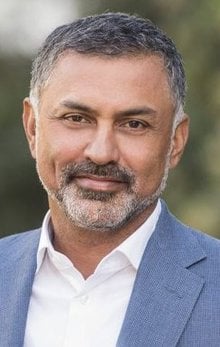
Nikesh Arora
Chairman CEO
Satya Nadella
Chairman and CEO
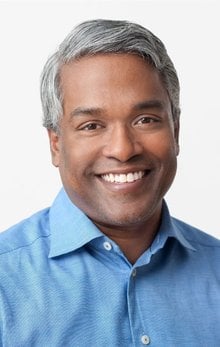
Thomas Kurian
CEO