
How Mistral AI Drives Sovereign AI Adoption in Manufacturing

AI is accelerating across industry at pace, but for cybersecurity leaders in manufacturing and critical infrastructure it introduces a familiar tension.
General-purpose models are rarely tuned for industrial environments yet exposing proprietary engineering data to train specialised systems can significantly increase cyber risk and intellectual property leakage.
A wave of partnership announcements with European AI firm Mistral AI highlights how manufacturers are navigating that balance.
Major industrial players including Airbus and BMW Group confirmed collaborations on 28 May, following earlier agreements with Stellantis and ASML.
From a cyber perspective these deals raise an important question: how do organisations harness high-performance AI without expanding their attack surface or losing control over sensitive operational data?
What is Mistral AI and why it matters for industrial cybersecurity
Founded in 2023 by AI researchers Arthur Mensch, Guillaume Lample and Timothée Lacroix, Mistral AI develops large language models with both open-source and proprietary offerings.
Its early growth was rapid, raising €105m (US$117m) in its first funding round and reaching €600m (US$645m) within a year.
In 2024, Microsoft invested US$16m while ASML committed US$1.5bn in 2025.

The company raised a further US$380m in 2026 to expand data centre capacity and acquired Paris-based startup Koyeb to strengthen its cloud infrastructure.
Alongside its technical progress, Mistral has positioned itself as a European alternative focused on sovereignty and enterprise deployment.
It has partnered with organisations including Veolia, Capgemini, Dassault Systèmes, Tesco, HSBC and BNP Paribas.
Airbus turns to AI for secure aerospace operations
Airbus says its partnership with Mistral AI supports its ambition to place “cutting-edge, ethical and trustworthy AI at the core of Airbus operations and processes”.
The aerospace company operates across commercial aviation, helicopters, defence and space, all of which require strict security controls and sovereignty standards.
Airbus, under the agreement, will license the full Mistral AI product suite and gain access to researchers and influence over future model development.
Catherine Jestin, Executive Vice President Digital at Airbus, said the collaboration enables “high-impact, high-value use cases of trusted and responsible AI in aerospace”.
“Thanks to the high-performance models and made-to-measure support of Mistral AI experts, we are building the foundations necessary to power our current and future products and services, enabling us to serve our customers better.”
Early applications include automating technical documentation for aircraft systems and improving engineering workflows. Airbus also highlights use cases in accelerating design cycles and providing on-demand engineering support.
Timothée Lacroix, Co-Founder and Chief Technology Officer at Mistral AI said: “We are proud to partner with Airbus and contribute to its critical industrial operations.”
BMW applies AI to crash data and engineering simulation security
BMW Group’s collaboration with Mistral AI focuses on AI-driven crash simulation and the use of industrial datasets to train models.
“For the BMW Group, the use of industrial data is a key factor in translating artificial intelligence into value creation,” said Dr. Franz Decker, CIO and Senior Vice President of the BMW Group.
“By combining our engineering datasets with Mistral AI’s model training capabilities, we are building specialised AI which supports complex development tasks.”
BMW operates thousands of virtual crash simulations each week, generating more than a petabyte of crash simulation data covering vehicle structure and material behaviour. The company is increasingly focused on large industry models trained on domain-specific engineering data.
ASML investment signals AI convergence with critical infrastructure
ASML led a US$1.5bn Series C investment in Mistral AI in 2025, valuing the company at around US$14bn and giving ASML an estimated 11% stake along with a seat on its Strategic Committee.
ASML President and CEO, Christophe Fouquet said the partnership is intended to generate benefits for customers through AI-enabled products and joint research.
“The collaboration between Mistral AI and ASML aims to generate clear benefits for ASML customers through innovative products and solutions enabled by AI, and will offer potential for joint research to address future opportunities,” said ASML President and Chief Executive Officer, Christophe Fouquet.
In cybersecurity terms, these applications sit close to operational technology environments where model accuracy, system resilience and secure log handling are essential to avoid cascading failures or misdiagnosis in production systems.
Stellantis integrates AI into vehicles and manufacturing systems
Stellantis has worked with Mistral AI since 2024 across engineering, fleet data analysis, sales systems and manufacturing optimisation.
The companies introduced an AI-powered in-car assistant in 2025 and are also developing a Bill of Materials intelligence tool to help engineers optimise component selection and reuse.
Mistral technology is also being evaluated for real-time anomaly detection in manufacturing environments.
“There are many players in the AI space, and we’re particularly happy to partner with Mistral AI for its strong ability to adapt quickly and drive meaningful results in a highly collaborative way,” said Ned Curic, Chief Engineering & Technology Officer at Stellantis.
“This partnership is an important step in our commitment to making GenAI more accessible and valuable,” said Arthur Mensch, CEO and Co-Founder of Mistral AI.
“Stellantis’ bold approach to technology and its ability to integrate advanced AI into real-world driving experiences make it an ideal partner to showcase how Mistral AI’s versatile solutions can reinvent mobility and empower engineers in their work.”
Enterprise AI adoption expands
Mistral AI’s broader enterprise ecosystem includes partnerships with TCS, EDF, Dassault Systèmes and Tesco.
TCS is the first global systems integrator for Mistral Forge, a platform designed for building enterprise AI models using proprietary and domain-specific data across manufacturing, banking, healthcare and the public sector.
EDF is working with Mistral to improve engineering, maintenance and construction processes for future EPR2 nuclear reactors, highlighting the role of AI in highly regulated energy infrastructure.
Mistral products such as Le Chat Enterprise and AI Studio are also available through Dassault Systèmes’ OUTSCALE sovereign cloud.
Tesco signed a three-year agreement in December 2025 granting access to Mistral’s commercial models and committing both companies to a joint AI lab for developing new generative AI applications.
“By leveraging Dassault Systèmes’ sovereign infrastructure and industrial solutions, we are advancing our shared mission of driving the use of cutting-edge generative AI for all," Arthur says.
For cybersecurity leaders, the expansion of AI into retail, energy and industrial cloud environments reinforces the need for strict data governance, model access controls and third-party risk management, particularly where sovereign cloud infrastructure is used to host sensitive workloads.
Company portals








Executives
Arthur Mensch
Co-founder & CEO

Catherine Jestin
Executive Vice President Digital
Christophe Fouquet
President and Chief Executive Officer

Dr. Franz Decker
CIO and Senior Vice President
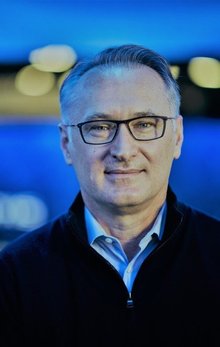
Ned Curic
EVP , Chief Engineering and Technology Officer
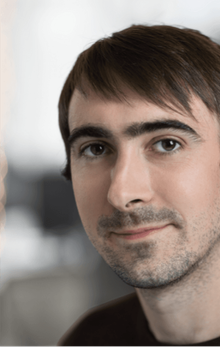
Timothée Lacroix
Co-Founder and Chief Technology Officer
- Bank of England Warns of Escalating AI, Cyber & Market RiskTechnology & AI
- IBM & Red Hat: How Lightwell Can Lock Up AI-Era Open SourceTechnology & AI
- Cisco Research Stresses AI's Enterprise Networking ChallengeNetwork Security
- AI Skill Gaps: Palo Alto Networks CEO Warns of ShortageCyber Security