
This Week's Top Five Stories in Cyber
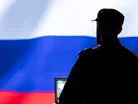
Why is Russia Banning WhatsApp and Telegram?
Russia's latest move to block WhatsApp messaging services could signal an escalating shift towards state-controlled digital infrastructure, raising significant concerns about data sovereignty and surveillance capabilities.
Domain names associated with the application were removed from Russia's national register of domain names, effectively cutting off access for devices within the country and forcing users to turn to virtual private networks (VPNs) to maintain connectivity.
The messaging platform responded by characterising the action as an attempt to push citizens towards a “state-owned surveillance app”.
WhatsApp says that: “Trying to isolate over 100 million users from private and secure communication is a backwards step and can only lead to less safety for people in Russia. ”
Google: How Threat Actors Use Gemini for Theft & Espionage
When Gen AI and agentic AI first appeared on the scene, the world seemed full of possibilities. However, those possibilities are not uniformly positive.
As the AI Threat Tracker report from the Google Threat Intelligence Group (GTIG) reveals, cybercriminals are increasingly turning to AI for assistance in their malicious campaigns.
From state-sponsored threat actors using AI for espionage to private companies enlisting AI for intellectual property theft, Google’s threat report paints a detailed picture of the adversarial use of AI.
As AI becomes a part of the business ecosystem, companies are investing large sums of money for specialised training of their AI. This is especially the case when the companies offerings are AI-powered services.

How Rising Geopolitical Tensions Trigger War in Cyber Space
Cybersecurity is not just about ransom or data loss or reputational damage – it is now a matter of national security.
The shaking up of the geopolitical order under US President Donald Trump and the power struggle that ensued forced nations with lesser military ammunition to draw from their cyber war chest.
The news of relentless cyber attacks and state-backed cyber operations aimed at espionage should be proof enough, but the 2026 State of Security Report released by Recorded Future more than validates these concerns.
“Uncertainty is no longer episodic – it’s the operating environment,” says Levi Gundert, Chief Security & Intelligence Officer at Recorded Future.
How Mastercard & Cloudflare's Deal Helps Close Security Gaps
In the age of AI driven cyber threats, effective defence requires strategic partnerships.
Formed with an established aim to develop tools that can defend against these advanced cyber attacks, a new partnership between leading connectivity cloud company Cloudflare and finance giant Mastercard is a welcome news to many.
The two companies will be combining their security offerings to help those that most need it – small businesses, governments and critical infrastructure – from threats that emerge in cyberspace, without having to slow down innovation.
“For small businesses, critical infrastructure and governments, a cyberattack is more than a technical hurdle – it is an existential threat,” says Stephanie Cohen, Chief Strategy Officer at Cloudflare.
Why Did Palo Alto Networks Acquire Security Startup Koi?
Another big league cyber acquisition has taken place.
Global security leader and Cyber Magazine’s reigning cybersecurity champion for the BSFI sector, Palo Alto Networks, has entered into a definitive agreement to acquire Koi, a pioneering security start up based in Israel.
Koi's unified endpoint security platform secures all software, packages, MCPs, extensions, AI models, AI agents and containers.
Fortune 500 enterprises are among its customers, including OpenAI, making it a valuable addition to Palo Alto Networks.
“We founded Koi to secure the next frontier of risk,” says Amit Assaraf, CEO and Co-Founder of Koi.








Executives
Amit Assaraf
CEO
Jamie Collier
Lead Threat Intelligence Advisor (Europe), Google Threat Intelligence Group

Levi Gundert
Chief Security & Intelligence Officer
Stephanie Cohen
Chief Strategy Officer




- Sophos Flags Vect-TeamPCP Cybercriminal Ransomware AllianceCyber Security
- JadePuffer: Sysdig Sniffs Out the First Agentic RansomwareHacking & Malware
- Bear Necessities: Google on The Russian Sphere of InfluenceCyber Security
- How Wiz ‘Turns the Lights On’ to Secure Automated Code FastTechnology & AI