Inside Palo Alto Networks' Acquisition of Chronosphere

As the use of AI increases amongst enterprises, so too do the quantities of data they use. For the modern business, that data has to be both visible and secure.
To this end, global leader in cybersecurity, Palo Alto Networks, has acquired Chronosphere, the 2025 Gartner Magic Quadrant leader for observability platforms.
By completing this landmark US$3.35bn deal, widely anticipated after its acquisition of CyberArk in 2025, the Silicon Valley company has consolidated its already strong position in cybersecurity leadership.
Nikesh Arora, Chairman and CEO of Palo Alto Networks says: “Enterprises today are looking for fewer vendors, deeper partnerships and platforms they can rely on for mission-critical security and operations.
“Chronosphere accelerates our vision to be the indispensable platform for securing and operating the cloud and AI.
“We believe that great security starts with deep visibility into all your data and Chronosphere provides that foundation for our customers.”
Data observability problem
As AI agents embed themselves in enterprise workflows, it is important to ensure that they cannot be exploited by threat actors. That, of course, requires deep visibility.
Chronosphere was purpose-built to handle this scale of data in the age of AI, as legacy tools often break down in cloud-native environments.
Palo Alto Networks, now with Chronosphere in its pockets, possess the ability to have deep, real-time visibility into their applications, infrastructure and AI systems – all the while maintaining control over the data cost and value.
Palo Alto Networks’ Cortex AgentiX platform will now integrate Chronosphere’s observability to automatically find and fix security flaws.
Martin Mao, Co-Founder and CEO of Chronosphere, joined Palo Alto Networks as SVP and GM of Observability following the acquisition.
“Chronosphere was built to help the world's most complex digital organisations operate at scale with confidence," he says.
“Joining Palo Alto Networks allows us to bring AI-era observability to a global audience.
“Together, we're delivering a new standard – where observability, security and AI come together to give organisations control over their most valuable asset: data.”
Chronosphere to lower enterprise ‘data tax’
Chronosphere’s telemetry pipeline can filter low-value data – otherwise known as noise – thereby reducing data volume by almost 30%.

This allows enterprise security analysts to focus on useful information rather than weeding through unnecessary data while using 20 times less infrastructure, compared to its legacy counterparts.
This “intelligent, data control layer” will be essential to the Cortex XSIAM strategy of Palo Alto Networks, allowing users to scale their autonomous AI operations without ballooning their spendings.
In the press release announcing the completion of the acquisition of the observability vendor, Palo Alto Networks notes that: “AI security without deep observability is blind.
“This acquisition delivers the essential context across models, prompts, users and performance to move from manual guessing to autonomous remediation.”
Rob Skillington, Co-Founder and CTO of Chronosphere, currently serving as VP at Palo Alto Networks recently wrote on LinkedIn: “From its inception, Chronosphere has been dedicated to creating a next-generation observability platform designed to manage the most intricate Cloud Native workloads.
“Now, we're accelerating that mission exponentially.
“By combining our disruptive, purpose-built observability platform with the AI-driven power of Cortex AgentiX, we will be moving beyond monitoring to deliver autonomous, agentic remediation at petabyte scale.”
Company portals


Executives
Martin Mao
SVP, GM of Observability
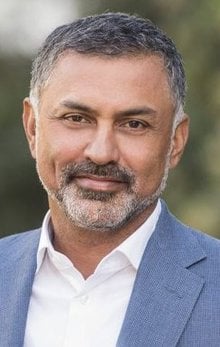
Nikesh Arora
Chairman CEO
Rob Skillington
VP, Fellow