
World ID to verify humans on Zoom, Tinder and Docusign
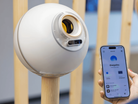
World, formerly Worldcoin, is rolling out its “proof of human” verification across major consumer platforms. The blockchain‑based identity start‑up, co‑founded by Sam Altman, Chief Executive Officer of OpenAI, uses an orb‑shaped iris scanner and a privacy‑preserving credential called World ID.
At its Lift Off event in San Francisco, World announced integrations that aim to help platforms distinguish real users from bots and deepfakes. The company says its approach is designed to be portable, private and usable at internet scale.
The push comes as AI‑generated media grows and bot attacks increase. Many online trust models still assume a human is operating a device, which creates openings for fraud and account takeover.
World positions World ID as a consistent, reusable proof that a user is a real person. It is not intended to reveal identity, only humanness and selected attributes.
Proof of human moves beyond device trust
Traditional log‑ins rely on passwords, PINs and device continuity. That approach can validate a session, but it does not prove a human is present.
World argues that this assumption is now the weakest link as gen AI improves. Attackers are using phishing, social engineering and session hijacking to bypass device‑level checks.
World ID introduces an account‑based architecture with key rotation, recovery and multi‑key support. This allows a user to maintain a single proof of human presence across services without exposing personal data.
Enterprises can adopt the protocol for higher assurance journeys. Session management features are intended to meet production needs at consumer scale.
Dating and video calls target deepfakes
Tinder will expand its World ID integration to the US. Users who complete iris verification will receive a distinctive badge on their profile to signal that they are verified humans.
The integration follows a pilot in Japan with Match Group, which owns Tinder, OkCupid and Hinge. The aim is to reduce scams and catfishing while keeping verification portable across devices.
Zoom will be the first communications platform to integrate World ID Deep Face directly into meetings. Rather than only attempting to detect manipulated video frames, the approach focuses on proving that a real person is present.
Deep Face compares three elements: a previously verified image, a live selfie on the user’s device and the ongoing video feed. If all three align, the participant is confirmed as a real, verified user.
Agreements and enterprise workflows
Docusign will allow signers to confirm specific attributes using World ID. This is designed for higher risk or regulated agreements that need stronger assurance of who is acting.
Historically, Docusign has relied on SMS codes, liveness checks and other biometric methods. World ID is intended to add a reusable human‑verification layer that does not disclose unnecessary personal information.
Attribute proofs can be applied selectively to minimise data exposure. This supports compliance needs while keeping user friction low.
As more enterprise workflows move online, stronger verification can help limit fraud and speed up approvals. Portable credentials reduce the need to repeat identity checks across services.
Privacy, oversight and scale
Previously, World’s model faced scrutiny from regulators following its inception. France’s data watchdog CNIL had questioned aspects of its biometric data handling. The UK’s Information Commissioner’s Office (ICO) had also opened investigations in 2023.
World states that its system is privacy‑preserving by design. Users can opt in, control how they prove humanness and limit the attributes they share.

The spotlight on deepfakes highlights the urgency of reliable human verification. Synthetic media is improving quickly, which raises the bar for detection‑only defences.
World reports more than 18 million verified humans across 160 countries. Whether World ID becomes foundational internet infrastructure will depend on governance, transparency and user trust as much as technology.