Top 10: Business Continuity Planning Tools
In a volatile world, robust operational resilience has fast become a core strategic necessity.
Modern enterprises must actively anticipate severe operational disruptions, ranging from catastrophic cyber attacks to critical supply chain failures, to ensure long-term survival.
Examining key performance metrics, corporate governance integrations and deployment scale, Cyber Magazine ranks the leading business continuity planning tools currently enabling global businesses to safeguard their assets.
10. Protecht
Year Founded: 1999
Headquarters: Sydney, Australia
CEO: Jason Phillips
Number of Employees: 200+
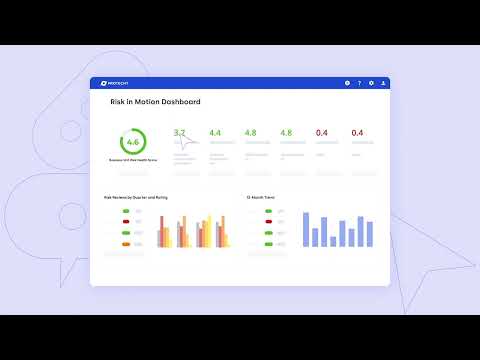
Protecht delivers a highly integrated approach to risk management through its flagship platform, Protecht ERM. It excels at connecting business continuity planning directly with broader operational risk and compliance frameworks.
The software allows organisations to map out critical processes, design detailed playbook responses and dynamically update risk registers as events unfold.
By synthesising corporate governance with real-world incident logging, Protecht helps companies move away from passive planning and transition into active, data-driven operational resilience.
9. Quantivate
Year Founded: 2009
Headquarters: Nashville, Tennessee, US
CEO: Michael Berman (Ncontracts)
Number of Employees: ~450
Quantivate provides a robust, modular governance, risk and compliance (GRC) suite, with its Business Continuity module serving as a core pillar.
The platform streamlines the entire lifecycle of continuity management, from initial business impact analysis (BIA) to continuous testing. It is particularly favoured within highly-regulated sectors like banking and insurance due to its integrated compliance mapping.
Quantivate seamlessly links operational data across multiple departments, ensuring that risk officers can coordinate responses effectively during large-scale operational failures.
8. RecoveryPlanner
Year Founded: 1999
Headquarters: Trumbull, Connecticut, US
CEO: Mark San Fratello (Agility Recovery)
Number of Employees: ~50
RecoveryPlanner is a dedicated, pure-play business continuity management software engineered for complex organisational structures.
The platform shines in its compliance tracking capabilities, aligning perfectly with global standards such as ISO 22301. It enables companies to design granular recovery plans, identify critical third-party dependencies and conduct realistic disaster scenarios.
Following its strategic acquisition by Agility Recovery, the tool integrates flawlessly with broader workplace recovery solutions, ensuring that plan execution and physical infrastructure resilience remain fully synchronised when disruptions strike.
7. ParaSolution
Year Founded: 1997
Headquarters: Montreal, Canada
President: Isabelle Primeau
Number of Employees: ~50
Developed by Premier Continuum, ParaSolution is an award-winning, cloud-based platform recognised globally for its intuitive end-user experience.
It bridges the gap between complex risk governance and day-to-day operations by simplifying BIA data collection and automated dependency mapping. The software includes powerful modules for IT disaster recovery and crisis management.
Recently augmented with advanced AI, ParaSolution enables resilience managers to evaluate risks proactively, update recovery strategies dynamically and satisfy stringent regulatory audits across diverse global jurisdictions.
6. Mitratech
Year Founded: 1987
Headquarters: Austin, US
CEO: Mike Williams
Number of Employees: 1,000+

Mitratech entered the business continuity arena by acquiring Preparis, transforming it into a premier, all-in-one operational resilience solution.
The platform is designed for quick deployment, making it a top choice for mid-market and enterprise organisations alike. It unifies business continuity formatting, mass notification messaging and incident reporting within a single, user-friendly interface.
Mitratech ensures that teams can easily access digital recovery playbooks via mobile applications, keeping staff connected and informed even if primary networks collapse.
5. Archer
Year Founded: 2001
Headquarters: Overland Park, Kansas, US
CEO: Bill Diaz
Number of Employees: 1,000+

As a pioneer in the enterprise GRC market, Archer delivers an exceptionally powerful Business Resiliency suite.
The software is engineered for massive organisations that require deep, granular oversight of corporate vulnerabilities, supply chain vectors and regulatory commitments.
Archer allows risk teams to construct highly-detailed, cross-functional workflows, mapping IT systems directly to business units and financial impact targets. It transforms traditional business continuity planning into a predictive mechanism for managing enterprise risk.
4. ServiceNow
Year Founded: 2004
Headquarters: Santa Clara, US
CEO: Bill McDermott
Number of Employees: 29,000+
ServiceNow leverages its immense, market-leading cloud architecture to deliver a dedicated business continuity management (BCM) application.
For organisations already utilising ServiceNow for IT service management, this tool is unmatched. It taps directly into the existing configuration management database (CMDB), providing live, automated visibility into how IT assets support business functions.
ServiceNow empowers digital businesses to automate impact assessments, orchestrate recovery procedures and resolve system outages rapidly, creating an unbroken thread between technology infrastructure and executive-level business continuity planning.
3. Everbridge
Year Founded: 2002
Headquarters: Pasadena, California, US
CEO: David Wagner
Number of Employees: ~1,700

Everbridge is a global juggernaut in critical event management (CEM), commanding a massive market share by protecting people and assets worldwide.
Through its dedicated tool, BC in the Cloud, Everbridge blends automated business continuity planning with world-class, multi-channel mass alert capabilities.
The system enables corporations to design data-driven recovery frameworks and then execute them immediately during geo-political, environmental,or cyber crises. It is highly valued for turning static contingency documentation into a dynamic, life-saving communication apparatus.
2. Riskonnect
Year Founded: 2007
Headquarters: Atlanta, US
CEO: Jim Wetekamp
Number of Employees: ~1,800
Riskonnect is an integrated risk management behemoth that significantly amplified its business continuity dominance by acquiring Castellan, a top-tier resilience platform.
Built to serve massive global enterprises, Riskonnect provides an exhaustive view of organisational risk by consolidating business continuity, third-party risk management and compliance into a singular repository.
The software enables risk professionals to perform automated business impact analyses, track single points of failure across supply chains and build comprehensive digital recovery playbooks.
By breaking down operational silos, Riskonnect transforms business continuity from an annual checkbox exercise into a continuous, real-time strategy, ensuring executive leadership can confidently navigate complex regulatory demands and unexpected operational headwinds.
1. Fusion Risk Management
Year Founded: 2006
Headquarters: Chicago, US
CEO: Mike Campbell
Number of Employees: ~350

Securing the top spot is Fusion Risk Management, the definitive standard for modern enterprise operational resilience.
Built natively on the robust Salesforce Lightning platform, Fusion goes far beyond traditional planning by mapping the intricate webs of people, processes, applications and third-party vendors that keep a business alive.
The platform features highly advanced analytics and predictive modelling capabilities, which have recently been supercharged with native AI to automate scenario testing and risk mitigation.
Fusion is trusted implicitly by global financial institutions and Fortune 100 corporations because it translates complex operational dependencies into actionable data. It provides security, risk and continuity leaders with a single solution to predict disruptions, absorb impacts and recover swiftly from major cyber incidents.
Company portals









Executives
Bill Diaz
Chief Executive Officer
Bill McDermott
Chairman and CEO
David Wagner
President and CEO
Isabelle Primeau, MBCI, CBCP
President and Business Continuity Expert

Jason Phillips
Chief Executive Officer
Jim Wetekamp
Chief Executive Officer
Mark San Fratello
Chief Executive Officer

Michael Berman
Chief Executive Officer
Michael Campbell
Chief Executive Officer
Mike Williams
CEO