Top 10: Identity & Access Management Platforms
As cyber threats grow more sophisticated and relentless, organisations are under increasing pressure to protect not just data, but identities.
From phishing attacks to credential stuffing, today’s threat landscape is increasingly focused on exploiting weak or mismanaged access points, both human and machine.
The rapid rise of AI, cloud computing, APIs and connected devices means machine identities now far outnumber human users, creating a vast and often overlooked attack surface.
At the same time, AI is reshaping identity and access management (IAM) by enabling smarter authentication and real time risk analysis, while also empowering attackers through tools such as deepfakes and AI-driven impersonation.
These advances make it easier to bypass traditional verification methods, raising the bar for security.
Modern IAM platforms now go far beyond login management, helping organisations govern access, secure machine interactions and detect suspicious behaviour with greater precision.
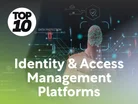
Cyber Magazine has compiled a list of the Top 10 Identity and Access Management Platforms leading innovation in security, scalability and intelligent access today.
10. 1Password
Headquarters: Toronto, Canada
Revenue: US$400m
CEO: David Faugno
Shattering its origins as a consumer-focused password vault 1Password has successfully transformed into an indispensable enterprise security platform for the modern age.
Generating a formidable US$400m in annual recurring revenue this Canadian cyber powerhouse fills a unique and critical gap within the corporate identity fabric.
While traditional platforms concentrate strictly on federated applications 1Password meticulously secures the sprawling landscape of unmanaged shadow IT and shared credentials that naturally evade standard single sign-on portals.
By delivering highly secure encrypted credential vaulting alongside advanced passwordless passkey support the vendor guarantees that endpoint access remains uncompromised.
Furthermore its developer-centric secrets management tools proactively mitigate the severe risks associated with hard-coded API keys.
Led by CEO David Faugno, the company provides a highly adoptable user-friendly security layer that perfectly complements broader governance deployments across remote-first workforces.
9. One Identity
Headquarters: Aliso Viejo, California, US
Revenue: Not Disclosed [Estimated by Prospero as US$250m]
CEO: Praerit Garg

Operating as a flexible identity security platform, One Identity masterfully connects legacy infrastructure governance with modern cloud-native access controls.
The platform delivers a deeply integrated identity fabric that seamlessly unifies governance, access management and privileged account workflows.
The vendor excels particularly within Microsoft-centric ecosystems by offering enhancements to Active Directory and Azure AD environments through its highly sophisticated Active Roles integration.
This functionality enables administrators to implement behaviour-driven governance and granular delegation effortlessly.
Following strategic industry acquisitions the platform now boasts advanced passwordless authentication and predictive AI insights to combat credential theft proactively.
Security architects frequently praise One Identity for providing a highly modular and pragmatic approach to corporate digital transformation.
It allows growing enterprises to modernise their security posture through phased rollouts without enduring the operational friction of a complete architectural overhaul.
8. Saviynt
Headquarters: El Segundo, California, US
Revenue: ~ US$200m [US$150m in 2023]
CEO: Sachin Nayyar

Saviynt continues to be a disruptive force in the cybersecurity sector by converging identity governance and privileged access management into a singular unified platform.
This innovative cloud-native architecture effectively eliminates the complex integration friction that has historically plagued massive enterprise deployments.
Built for modern identity challenges, Saviynt leverages AI‑powered automation to analyse access patterns, provide intelligent access recommendations and streamline compliance reporting across both human users and non‑human identities including machine accounts and AI agents.
Its platform also includes machine identity governance features that extend controls to cryptographic keys, certificates and other automation credentials.
For heavily regulated global organisations requiring granular segregation of duties alongside scalable cloud deployments, Saviynt offers a unified and modernised approach to comprehensive identity and access security.
7. Delinea
Headquarters: San Francisco, California, US
Revenue: US$400m +
CEO: Art Gilliland

Delinea has developed beyond traditional privileged access management to become a leading platform for modern identity security.
The company delivers cloud-native services that govern privileged access for both human and machine identities while helping enterprises strengthen compliance and reduce risk.
With annual recurring revenue exceeding US$400m, Delinea has seen strong adoption across global organisations seeking robust access controls.
Its strategic acquisition of StrongDM adds just-in-time runtime authorisation capabilities, enabling real-time privilege enforcement across hybrid and multi-cloud environments.
The platform’s Iris AI engine provides intelligent analytics to automate risk-based access decisions, optimise policies and deliver unified visibility over privileged activity.
Designed for enterprises looking to modernise without disruptive overhauls, Delinea combines traditional privileged access management with continuous authorisation and discovery, offering a comprehensive solution that safeguards sensitive resources and supports AI-driven workflows.
6. IBM Security Verify
Headquarters: Armonk, New York, US
Revenue: US$67.5bn
CEO: Arvind Krishna
IBM Security Verify is a flexible enterprise identity and access management platform built to keep up with today’s hybrid and cloud-first environments.
Drawing on insights from IBM X-Force, it helps organisations stay one step ahead of threats by providing risk-based authentication, adaptive access and continuous monitoring across both human and machine identities.
The platform makes it easy to use single sign-on, multifactor authentication and modern passwordless or biometric login, while still working with legacy systems and cloud applications.
As machine identities, APIs and microservices become a bigger part of enterprise IT, Security Verify offers governance and policy controls to manage access securely and contextually across all digital workloads.
Its reporting and compliance features support highly regulated industries like finance, manufacturing and healthcare, helping teams stay audit-ready.
By combining intelligent access decisions, enterprise-scale scalability and unified identity security, IBM Security Verify helps organisations modernise their digital operations without compromising on safety or control.
5. Ping Identity
Headquarters: Denver, Colorado, US
Revenue: ~ US$800m
CEO: Andre Durand

Ping Identity is a leading enterprise identity and access management platform trusted by large organisations around the world.
Following its merger with ForgeRock, the company now offers a comprehensive set of tools to manage workforce and consumer identities at scale.
A key part of the platform is PingOne DaVinci, a low-code orchestration engine that lets security teams and developers design, test and deploy custom authentication and registration flows using easy API integrations.
The platform provides modern authentication, single sign-on, federation and adaptive access to help secure web, mobile and API environments.
Features like opaque refresh tokens strengthen session security and reduce risks from token-based attacks.
With its developer-friendly tools and flexible integration options, Ping Identity helps organisations scale their digital operations securely while keeping compliance and operational efficiency in check.
4. SailPoint
Headquarters: Austin, Texas, US
Revenue: US$1.125bn
CEO: Mark McClain
SailPoint is widely recognised as one of the leading enterprise identity governance and administration platforms used by major organisations around the world.
The company’s Identity Security Cloud helps businesses manage access at scale by automating user access reviews, enforcing policies and linking identities to the right resources.
This reduces the operational burden of overseeing millions of access entitlements and helps teams stay on top of compliance across hybrid IT environments.
SailPoint uses AI‑driven insights to improve visibility and identify risky access so organisations can tighten controls and follow least privilege principles more effectively.
With strong recurring revenue well into the high hundreds of millions the company has established a solid financial position to support continued innovation.
For large global enterprises with complex compliance demands SailPoint offers detailed visibility into who has access to what and why, helping to uncover hidden access risks and reduce the overall attack surface.
3. CyberArk
Headquarters: Newton, Massachusetts, US
Revenue: US$1.44bn
CEO: Matt Cohen
CyberArk stands among the global pioneers as a gold standard for privileged access management.
What began as a credential vault has grown into a wider identity security ecosystem that helps secure both human users and machine identities such as service accounts, applications and automation workflows.
The platform is built around the principle of zero standing privilege, reducing attack surfaces by giving accounts just the access they need when they need it.
CyberArk also uses behaviour analytics and machine learning to help detect unusual activity and support response workflows when threats emerge.
In recent months, Palo Alto Networks had completed the acquisition of CyberArk in a major strategic move that would bring together two of the most widely used security technology portfolios, subject to regulatory approval.
CyberArk regularly features near the top of industry evaluations for privileged access controls and identity security solutions.
For global organisations with strict requirements for data protection and critical infrastructure security, CyberArk continues to be a trusted choice that combines depth of capabilities with broad enterprise readiness.
2. Okta
Headquarters: San Francisco, California, US
Revenue: US$2.91bn
CEO: Todd McKinnon

Okta commands a dominant market position as a premier cloud-based identity management provider, serving as the primary authentication gateway for diverse SaaS-heavy enterprise environments.
Organisations often turn to Okta for its straightforward single sign‑on and multi‑factor authentication, along with a large library of pre‑built integrations that help reduce deployment time and support a smooth log‑in experience for users.
A notable advancement in Okta’s portfolio is its Identity Threat Protection capability, which uses shared risk signals and intelligent analysis to spot unusual activity and respond in real time, for example by triggering universal logouts when needed.
The platform has also broadened its governance features to include more granular controls around separation of duties to help reduce conflicting access risks and support compliance.
With support for both human users and non‑human identities such as APIs and service accounts, Okta helps organisations build a unified identity security fabric that scales with modern digital operations.
1. Microsoft Entra ID
Headquarters: Redmond, Washington, US
Revenue: US$281.7bn
CEO: Satya Nadella

Commanding the undisputed number one position, Microsoft structurally redefines the industry through its formidable identity solution Microsoft Entra ID.
Because it is natively woven into the core fabric of Azure infrastructure, Microsoft 365 and the broader corporate ecosystem it offers organisations a remarkably seamless extension of their existing security architectures.
A standout feature in recent updates is Security Copilot, Microsoft’s Gen AI assistant that helps security teams investigate threats, automate lifecycle tasks and refine conditional access policies using everyday language.
By bringing AI into the identity console, Microsoft aims to make complex security operations more intuitive and responsive.
Furthermore Microsoft leads the vanguard in securing the automated future by establishing enterprise-grade manageable identities specifically for autonomous AI agents.
With visibility across vast amounts of security data from its global cloud footprint, Microsoft’s identity platform helps organisations adapt to evolving threats while supporting compliance and scale.






Executives
Andre Durand
Founder & CEO
Art Gilliland
Chief Executive Officer

Arvind Krishna
CEO
David Faugno
CEO
Mark McClain
CEO & Founder
Matt Cohen
Chief Executive Officer
Praerit Garg
Chief Executive Officer
Sachin K Nayyar
Chief Executive Officer
Satya Nadella
Chairman and CEO

Todd McKinnon
CEO and co-founder