Why has the US Softened its Anthropic Mythos 5 Ban?

After a dramatic ban on Anthropic’s AI for foreign use which sent shockwaves across the tech industry, the US government has partially eased restrictions on Anthropic's advanced Mythos 5 model following negotiations aimed at strengthening cybersecurity safeguards.
Under the revised arrangement, a roster of approved companies and government partners will once again be able to access Mythos 5, while the broader restrictions on Anthropic's Fable 5 model remain, making the tech unavailable outside tightly controlled environments.
The regulatory rollback follows weeks of discussions between the US Commerce Department and Anthropic after officials raised concerns over the vast cybersecurity implications of the company's latest AI systems.
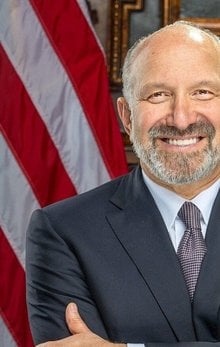
Commerce Secretary Howard Lutnick said the discussions had resulted in "significant progress", adding that Anthropic had committed to working with the US government on protocols, standards and future releases of the affected models.
The disclosure was made by the Commerce Secretary in a letter to Anthropic Chief Compute Officer, Tom Brown, which was seen and reported by the Wall Street Journal.
Big risks, tighter oversight
Earlier this month, Amazon security researchers demonstrated methods to bypass some of Fable 5's safety protections, accessing portions of the tool which could raise national security concerns, according to Axios.
In light of this, the administration decided to pull the plug on Fable and Mythos, asking Anthropic to take down both models after they were deemed to pose a national security threat.

On 12 June, the White House sent a letter to Anthropic, slapping the Mythos and Fable models with export control regulations.
A report from Axios indicates that the export control directive led to conversations between Anthropic leaders, including CEO Dario Amodei, and the administration.
Anthropic argued that the jailbreak was relatively simple and could be performed on other models, and this in itself was not a security flaw of the Mythos class tools.However, by 10pm that night, users had lost access to Fable.
The incident has intensified debate over how governments should regulate increasingly capable AI systems.
“The introduction of guardrails isn’t evidence that the problem is solved – it’s an admission that even the companies building these models don’t fully trust where the capability leads,” says Andrew Rubin, Founder and CEO of Illumio.
“Constraints at the interface don’t change the underlying math. Attackers won’t operate at that layer. They’ll go straight after the capability itself. And as these tools become more broadly available, the speed and scale of attacks will only increase.
“The real question is whether defenders are prepared to operate at the same speed.”
OpenAI delays GPT 5.6
Anthropic is not the only company caught in the regulatory crossfire.
OpenAI has delayed the wider release of GPT-5.6 after the Trump administration requested a phased rollout, allowing federal officials to assess the model's potential cybersecurity and national security risks before broader deployment.

The parallel decisions suggest AI developers are increasingly aligning product launches with national security assessments than commercial timelines alone.
The absence of a clear regulatory framework is forcing companies to respond to individual government interventions as new security issues emerge.
Major cybersecurity play in coming AI regulation
The White House is continuing work on implementing an executive order that gives federal cybersecurity officials a greater role in evaluating advanced AI models before broader deployment.
The objective is to establish more consistent standards for assessing whether powerful systems present unacceptable national security risks.
For the cybersecurity sector, the Anthropic decision signals that advanced AI models are increasingly being treated as strategically sensitive technologies.
As governments seek to balance innovation with security, future AI releases are likely to face far greater scrutiny, particularly when models demonstrate capabilities that could be used for both cyber defence and cyber offence.
Company portals




Executives

Andrew Rubin
Founder and CEO

Dario Amodei
CEO and Co-Founder
Howard W. Lutnick
Secretary of Commerce
Tom Brown
Co-Founder and Chief Compute Officer