Top 10: Endpoint Security Companies

With malicious actors waiting to swoop down at the first sign of vulnerability, securing mobile devices, laptops, servers, workstations and other devices from threats is non-negotiable for businesses.
These end point devices that employees use for work or servers deployed on the cloud that hold valuable business data, require top-notch protection in today’s cyber landscape crowded with advanced AI-driven threats.
This makes choosing top tier endpoint security protection a make or break decision for most enterprises. From the busy market of endpoint protection offerings, Cyber Magazine showcases the top 10 endpoint security companies ranked by their market capitalisation and products they offer.
10. Trellix
HQ: Milpitas, California, USA
CEO: Vishal Rao
Market Cap: US$4-6bn
Born of the merger between FireEye and McAfee Enterprise, Trellix creates a defensive grid for the US public sector and defence industrial base. Its Trellix Endpoint solution is renowned for its digital forensics capabilities that allows incident responders to analyse the deepest details of a nation-state attack. Under new CEO Vishal Rao, the company is pushing “Living Security,” an Extended Detection and Response (XDR) approach that adapts dynamically to threat intelligence, making it the preferred vendor for organisations facing Advanced Persistent Threats (APTs) and seeking government compliance.
9. SentinelOne
HQ: Mountain View, California, USA
Co-Founder and CEO : Tomer Weingarten
Market Cap: US$4.97bn

SentinelOne positions itself as the leader in autonomous approach to endpoint protection. Unlike crowd-based solutions that rely on internet connectivity for analysis, SentinelOne’s Singularity Agent uses on-device AI to detect and kill malware in real-time, even when offline. This makes it a top choice for field operations, air-gapped networks and privacy-conscious firms. Their new Purple AI allows analysts to hunt for threats using natural language queries, democratising sophisticated security operations (SecOps) for mid-sized enterprises looking to automate threat detection and response.
8. Trend Micro
HQ: Shibuya, Tokyo, Japan
CEO: Eva Chen
Market Cap: US$5.4bn
Trend Micro is a global leader in Hybrid Cloud Workload Security. While competitors focus on user laptops, Trend Micro protects the data centre and cloud workloads (AWS/Azure) that run the business. Trend Vision One, Trend Micro’s XDR platform, excels at correlating threats across email, servers and endpoints. Their proprietary Zero Day Initiative (ZDI) is the largest contributor to publicly disclosed vulnerabilities, significantly overshadowing other organisations, hence enabling them to offer virtual patching capabilities to customers that can protect against exploits weeks before official vendor patches are released. This is vital for vulnerability management programmes.
7. Check Point
HQ: Tel Aviv, Israel
CEO: Nadav Zafrir
Market Cap: US$20bn

Check Point is the “prevention-first” vendor, anchored by its unified Infinity Platform, trusted by nations and critical infrastructure. With its automated remediation capabilities, Check Point’s Harmony Endpoint can rollback ransomware encryption with a single click. Its ThreatCloud AI is one of the world’s largest intelligence networks, ingesting data from millions of network sensors to stop unknown malware. Under Nadav's leadership, the company is increasing its go-to-market efforts and emphasising its Infinity platform to meet the needs of enterprise and risk-focused organisations that require comprehensive, unified cybersecurity protections.
6. Fortinet
HQ: Sunnyvale, California, USA
Founder and CEO: Ken Xie
Market Cap: US$60bn

Fortinet is the ideal partner for manufacturing, retail and Operational Technology (OT) security. Its FortiClient agent integrates tightly with the Fortinet Security Fabric, allowing the endpoint to communicate directly with FortiGate firewalls. This enables unique automated responses, such as quarantining an infected factory machine at the switch port level. With FortiEDR, businesses get real-time, pre-infection blocking that is lightweight enough to run on legacy Point-of-Sale (POS) systems and IoT devices without disrupting operations, ensuring business continuity. This combined enterprise security infrastructure allows enterprises to maintain robust endpoint hygiene and consistent policy enforcement across the business.
5. CrowdStrike
HQ: Austin, Texas, USA
Co-Founder and CEO: George Kurtz
Market Cap: US$117.98bn
CrowdStrike is the “premium” choice for cloud-native endpoint protection. The CrowdStrike Falcon Platform redefined endpoint security via a single lightweight agent that requires no reboot, making it effortless to deploy across thousands of remote devices. Key modules include Falcon Prevent (Next-Gen Antivirus/NGAV) and Falcon Insight (EDR), which stream data to the cloud for real-time analysis by its Charlotte AI. CrowdStrike creates a fast “crowdsourced immunity” where a threat detected in one customer environment instantly immunises all others globally against ransomware attacks and zero-day exploits, keeping organisations safe from sophisticated threats.
4. Palo Alto Networks
HQ: Santa Clara, California, USA
CEO: Nikesh Arora
Market Cap: US$133bn
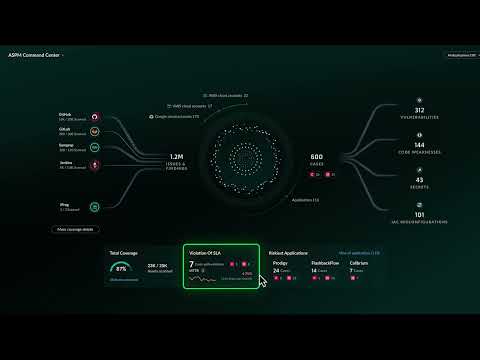
Palo Alto Networks is the leader for enterprises that prioritise network-to-endpoint visibility. The company’s Cortex XDR was industry's first platform to natively integrate endpoint, network (firewall) and cloud data into a single automated detection engine, allowing security teams to instantly trace the root cause of an attack. This enables organisations to see exactly how a threat moved from a firewall breach to a laptop infection. Palo Alto Networks’ Unit 42 MDR service provides elite, 24/7 threat hunting and incident response, leveraging one of the world's most respected threat intelligence teams to stop Advanced Persistent Threats (APTs) in enterprises.
3. Cisco Systems
HQ: San Jose, CA, USA
CEO: Chuck Robbins
Market Cap: US$298.2bn
Cisco enters the top tier of endpoint security by integrating Cisco Secure Endpoint (formerly AMP) into its massive networking fabric. Powered by Talos Intelligence, one of the world's largest commercial threat intelligence teams, Cisco offers a unified XDR platform that correlates threats across endpoints, networks and the cloud. It is a top choice for enterprises seeking integrated security architectures that automatically quarantine infected devices at the switch port level to stop the lateral movement of ransomware.
2. Broadcom
HQ: Palo Alto, California, USA
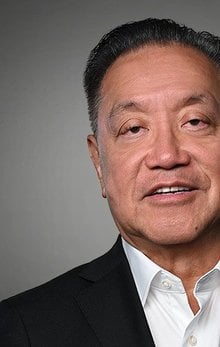
CEO: Hock E Tan
Market Cap: US$1.7tn
Operating under Broadcom’s “franchise” model, Symantec is a major force in today’s endpoint security landscape. SES Complete, Broadcom’s enterprise-grade security platform delivers deep defence-in-depth, combining modern Endpoint Detection and Response (EDR) capabilities with legacy-critical technologies like hardening and deception. It is particularly valued by banks and governments for its ability to secure complex, hybrid cloud environments that span on-premise servers and cloud workloads, where full cloud migration is not yet possible. Broadcom solutions protect a diverse range of environments against a vast array of threats including malware, ransomware and targeted attacks.
1. Microsoft
HQ: Redmond, Washington, USA
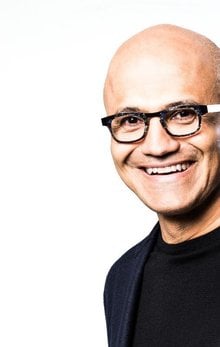
CEO: Satya Nadella
Market Cap: US$3.5tn

Microsoft is hands down the most dominant force in endpoint security, making it the default choice for Global 2000 enterprises seeking vendor consolidation and cost reduction. Its flagship Defender for Endpoint is built directly into the Windows kernel, offering agentless security that eliminates deployment friction. Copilot for Security, a generative AI security assistant that speeds up incident response by translating complex threat data into natural language is a valuable tool for businesses. With the Microsoft 365 E5 license, organisations can leverage a unified Zero Trust platform that covers endpoints, identity (Entra ID) and cloud apps, often reducing total cost of ownership by up to 60% compared to using multivendor stacks.
Company portals




Executives
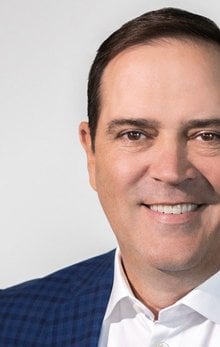
Chuck Robbins
Chair and CEO

Eva Chen
George Kurtz
President / CEO & Founder
Hock Tan
President and Chief Executive Officer
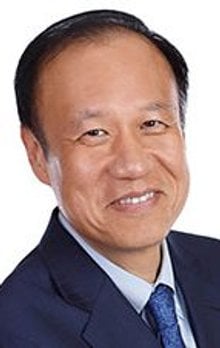
Ken Xie
Founder, Chairman of the Board, and Chief Executive Officer (CEO)
Nadav Zafrir
Chief Executive Officer
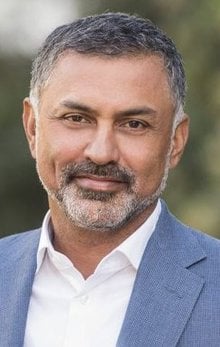
Nikesh Arora
Chairman CEO
Satya Nadella
Chairman and CEO
Tomer Weingarten
Co-founder / CEO
Vishal Rao
Chief Executive Officer