Today, businesses face an ever-evolving landscape of cyber threats. From ransomware and phishing to insider threats and advanced persistent attacks, malicious actors are constantly adapting their methods to exploit vulnerabilities across digital ecosystems.
For large organisations, repercussions can be significant, including data breaches, disruption and reputational damage.
As a result, effective threat detection is a cornerstone of enterprise cybersecurity. It enables companies to identify, analyse and respond to threats in real-time, reducing the risk of undetected breaches and ensuring business continuity.
As IT environments grow increasingly complex with the rise of cloud services, remote work and IoT devices traditional security measures are insufficient. Rather, companies need advanced, intelligent threat detection systems that can scale with their infrastructure and adapt to emerging risks.
With that in mind, we spotlight 10 of the leading threat detection companies that are helping global businesses stay one step ahead of cyber criminals. Each has proven expertise, robust platforms and a strong track record of securing enterprise networks at scale.
10. Trend Micro
CEO: Eva Chen
Headquarters: Tokyo, Japan
Trend Micro offers comprehensive threat detection through its XDR (Extended Detection and Response) platform, integrating data from endpoints, servers, cloud workloads and networks to detect and respond to threats effectively. Its solutions employ AI and machine learning to identify and mitigate advanced threats, including ransomware and zero-day exploits. Trend Micro's focus on cross-layered detection provides enterprises with a holistic view of their security posture, enabling faster and more accurate threat response.
9. Cisco Security
CEO: Chuck Robbins
Headquarters: San Jose, California, USA
Cisco Security enables companies to have security resilience and enhanced protection in an increasingly complex enterprise environment. It provides organisation-wide threat detection through its SecureX platform, which integrates threat intelligence from its Talos research group. Solutions span firewalls, intrusion prevention, endpoint protection and cloud security. Cisco also leverages its deep networking expertise to correlate and respond to threats across distributed environments. The company’s ability to offer unified, automated responses across the enterprise makes it well suited for large organisations undergoing digital transformation or operating hybrid infrastructure.
8. IBM Security
CEO: Arvind Krishna (IBM)
Headquarters: Armonk, New York, USA
IBM Security is a broad suite of products and solutions from IBM that helps large organisations manage and mitigate security risks. It helps them detect and respond to advanced threats using its flagship QRadar SIEM and XDR platforms. These tools analyse large volumes of data to uncover anomalies, then automate triage and correlate incidents in real time. IBM’s security services are underpinned by AI through the company’s Watson platform and informed by global threat intelligence from X-Force, IBM’s cybersecurity division that works with large organisations to tackle threats.
7. Sophos
CEO: Kris Hagerman
Headquarters: Abingdon, Oxfordshire, UK
British security and software company Sophos provides comprehensive enterprise-grade threat detection through its Intercept X Advanced solution. The innovative platform combines deep learning AI with anti-exploit technology to stop ransomware, zero-day attacks and fileless malware. Sophos’ synchronised security approach connects endpoint, email, firewall and cloud security to detect coordinated threats and automate response. Its centralised management console gives IT leaders clear visibility and simple policy control across large networks. With rapid rollback capabilities and forensics tools, Sophos ensures threats are not only detected early but fully neutralised.
6. SentinelOne
CEO: Tomer Weingarten
Headquarters: Mountain View, California, USA
SentinelOne’s Singularity platform provides organisations with autonomous threat detection and response using AI and machine learning across endpoints, cloud workloads and identities. It identifies anomalous behaviour, isolates malicious activity and remediates automatically, all without human intervention. SentinelOne’s XDR capabilities integrate data from multiple sources to accelerate detection speed and accuracy. Large organisations rely on its real-time protection against ransomware, supply chain attacks and insider threats. The platform’s flexibility and scalability make it a strong choice for security teams seeking visibility and automation across diverse environments.
5. Zscaler
CEO: Jay Chaudhry
Headquarters: San Jose, California, USA
Zscaler offers cloud-native threat detection through its Zero Trust Exchange, a secure platform that inspects every enterprise connection, whether user, device or app, before granting access. The company uses AI and inline inspection to detect threats in encrypted traffic, block malware and prevent data loss. With comprehensive web, email and application security, Zscaler is built for enterprises using remote work and hybrid cloud approaches. The platform ensures threats never reach the corporate network, enabling a more resilient and scalable security posture across global operations.
4. Check Point Software Technologies
CEO: Gil Shwed
Headquarters: Tel Aviv, Israel
Check Point delivers advanced enterprise threat prevention through its Infinity architecture, which covers cloud, network, mobile and endpoint environments. It uses real-time AI, threat emulation and deep packet inspection to detect and block sophisticated attacks, including zero-day threats. The platform’s unified management interface allows streamlined policy control and consistent enforcement across infrastructure. Large enterprises benefit from Check Point’s ability to deliver high-throughput security while reducing complexity and improving visibility across attack surfaces.
3. Fortinet
CEO: Ken Xie
Headquarters: Sunnyvale, California, USA
Many of the largest organisations in the world trust Fortinet, which counts over 700,000 enterprises, service providers and governments as customers. The company provides high-performance threat detection through its FortiGate firewalls, FortiAI and FortiEDR. Its Security Fabric integrates network, endpoint and cloud security, delivering behavioural analytics, sandboxing and automated incident response. Fortinet is known for combining cost efficiency with robust performance, making it a go-to for enterprises with large, distributed infrastructures. Its AI-based analysis and tight integration between tools help reduce manual response time and unify defences.
2. CrowdStrike

CEO: George Kurtz
Headquarters: Austin, Texas, USA
CrowdStrike’s Falcon platform is a leader in cloud-native threat detection, using machine learning and real-time telemetry to protect endpoints, workloads and identities. Falcon’s strength lies in its unified approach and AI-native technology that helps tackle the many adversaries facing the modern enterprise.
Falcon analyses over two trillion events daily and applies behavioural analytics to prevent breaches before they occur. This proactive approach to security provides an 80% improvement in risk posture, reduces threat research time by up to 11,000 hours and saves businesses up to US$3m a year in security operations.
CrowdStrike offers rapid detection, proactive threat hunting and strong incident response, making it a preferred partner for enterprises fighting ransomware, nation-state threats and insider risks. Its platform is scalable and API-friendly, integrating easily with broader enterprise security ecosystems.
1. Palo Alto Networks

CEO: Nikesh Arora
Headquarters: Santa Clara, California, USA
Precision AI is at the heart of Palo Alto Networks’s security solutions, allowing businesses to simply, secure and defend. The company, which has been consistently recognised as a leader in Gartner Magic Quadrants for several cybersecurity areas, leads the industry with its AI-driven Cortex XSIAM platform and next-generation firewalls.
Palo Alto’s security operations centre (SOC) automation, behavioural analytics and threat intelligence empowers enterprises to detect and respond to incidents faster than ever. The company covers the entire attack surface: network, cloud, endpoint and identity. Its threat detection solutions, like Prisma Cloud and Cortex XDR combine AI, ML and threat intelligence.
As well as specific solutions, enterprises benefit from automated playbooks, real-time risk scoring and deep visibility. As a top choice for Fortune 100 firms, Palo Alto Networks excels in scaling protection while reducing complexity in large environments.
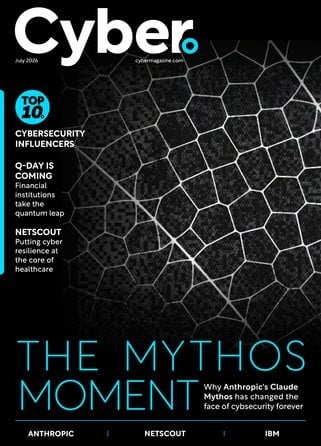
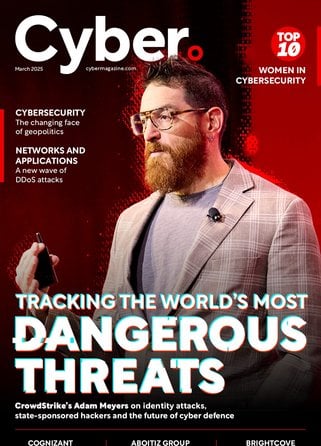
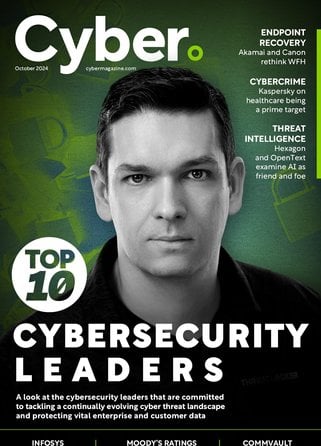
Explore the latest edition of Cyber Magazine and be part of the conversation at our global conference series, Tech & AI LIVE and Cyber LIVE.
Discover all our upcoming events and secure your tickets today.
Cyber Magazine is a BizClik brand